Your cart is currently empty!

Creation and Life Itself
September 1 @ 7:00 pm – September 8 @ 2:00 pm CEST

2 people are attending Creation and Life Itself
Science, Art and the Sacred Series
Creation and Life Itself
September 1 – 8, 2026
Speakers: Sarah Churchwell, Lauren Cole, Nicholas Colloff, Isabel Hawkins, Angie Hobbs, Karina Miotto, Shelly Valdez.
Curated and Chaired by: John Pickering
Location: Pari, Italy
Ticket Prices:
Private Accommodation
Price: 2175.00 euros
Shared Accommodation – Private Room with shared bathroom
Price: 1875.00 euros
which includes:
- a 7-night stay;
- breakfast, lunch and dinner at the local restaurant featuring locally sourced produce and traditional dishes;
- water, wine, and coffee are provided with lunch and dinner;
- programmed lectures, activities and materials
There is a limited amount of accommodation in Pari and you will be placed on a first-come, first-served basis. We will also be using accommodation just outside of the village—within 3 kilometres. If you are housed outside Pari, a shuttle to and from the village will be provided.
Event: The event starts with dinner on Tuesday September 1 at 19:00 and ends after lunch on Tuesday Setpember 8.
Download information, terms and conditions for this course.
About the Event
At its best, being ‘human’ means being creative. Here, ‘creative’ means more than just poetic language or beautiful images. It speaks to something primordial in nature, since life itself is creation. Our meeting will look at the complementary ways in which science, the humanities and spiritual traditions recognise this and how that might inform the lives we lead, singly or collectively.
All human cultures have Creation stories. They reflect our wonder at life itself and the enchanting diversity of Creation that it brings forth. To tell and re-tell the stories is part of being human.
Science is sometimes accused of disenchanting Creation; in fact, it has enhanced it, since the wonder remains. Scientists like David Attenborough express as much love for living things as poets or mystics have done down the ages and as people living in animistic cultures do now.
Animistic Creation stories are of a transformative relation between beings of all kinds that continually and reciprocally bring one another into existence. So, in that view, simply living and being human is to be creative, where ‘creative’ means more than just making poetic language or beautiful images.
Luckily, we live in a time when science, the humanities and the arts are becoming more open, in complementary ways, to recognising this. Our meeting will look at how that might inform the lives we lead, singly or collectively.
We will investigate what ‘being human’ and ‘being creative’ might have meant in the past, what it means in our time. We will look at creativity in science, in the arts and humanities and in spiritual traditions, paying particular attention to women’s voices, those heard and those not. We will, for example, hear from speakers on Hildegarde of Bingen and Julian of Norwich, as well mystical traditions from South American cultures.
Being human, all too human, is difficult. Being more than human, particularly so. Creativity in some sense extends, even transcends the human condition, and we will explore what philosophy and the humanities have to say about that.
Now is a particularly appropriate time to do it, as both creativity and what it is to be human are brought into question by the rise of the machine.
Participating in an event at the Pari Center is more than joining a program, it is entering an experience unlike any other. This is no ordinary conference in a city hotel, nor a retreat hidden within a bustling resort. Instead, it is an invitation to step into an unspoilt medieval village in the Tuscan hills, where time slows and life unfolds at a rhythm that allows you to think, feel, and reconnect.
At the Pari Center, learning becomes a way of being. David Peat often described Pari as an alchemical vessel—a transformative space designed for reflection, renewal, and personal growth. It is a rare and welcoming environment for anyone seeking something deeper.
You will share traditional Tuscan meals and conversation with presenters and fellow participants, taste local wines, mingle with the village’s tiny community, and take in the beauty of the surrounding countryside. All of this unfolds within a gentle way of life, far removed from the hurry of work and the noise of city living.
The Pari Center gathers world-renowned thinkers, scholars, and innovators from diverse disciplines and traditions. Our mission is to explore the mysteries woven into everyday life: the subtle, essential questions that shape who we are and who we are becoming. Through rigorous inquiry, creative dialogue and participatory activities, we aim to illuminate the origins, nature, and possibilities of human experience.
We invite you to discover why so many visitors regard the Pari Center not only as a place of learning, but as a place of personal transformation.
Please contact Eleanor if you would like more information about this event at: eleanor@paricenter.com
Speakers and sessions
Click on a title to expand
It may seem on the surface that our modern secular society has little in common with the stringent religious culture of medieval Europe. As the story goes, we have moved from a “Dark Age” of superstition to an enlightened age of reason. But look a little closer, and we find that in trying to make sense of the world, we inevitably fall back on the same tools.
In this session, we examine these sense-making tools in the writings of medieval women mystics and their counterparts today. The writings of mystics such as Hildegard von Bingen, Julian of Norwich, Catherine of Siena, and Mechthild of Magdeburg provide us with frameworks for environmentalism, feminist thought, and natural medicine today. Parallels we will explore include Hildegard von Bingen’s lapidary and today’s crystal healing, beguines’ practices of care and today’s care homes, and mystical astrology and today’s horoscopes.
Ultimately, this session will consider what we have already learned from medieval women mystics, and what we can continue to learn.

Lauren Cole is a PhD History Candidate and Presidential Fellow at Northwestern University. Her research centres on medieval mystics, medicine, and manuscripts in Europe, with a particular focus on Hildegard von Bingen. Lauren is also a public historian, creating videos on medieval history for over 95’000 followers on her Instagram and TikTok accounts (@MedievalLauren). Lauren splits her time between London, Mainz, and Chicago. You can find more on her website: https://medievallauren.wordpress.com
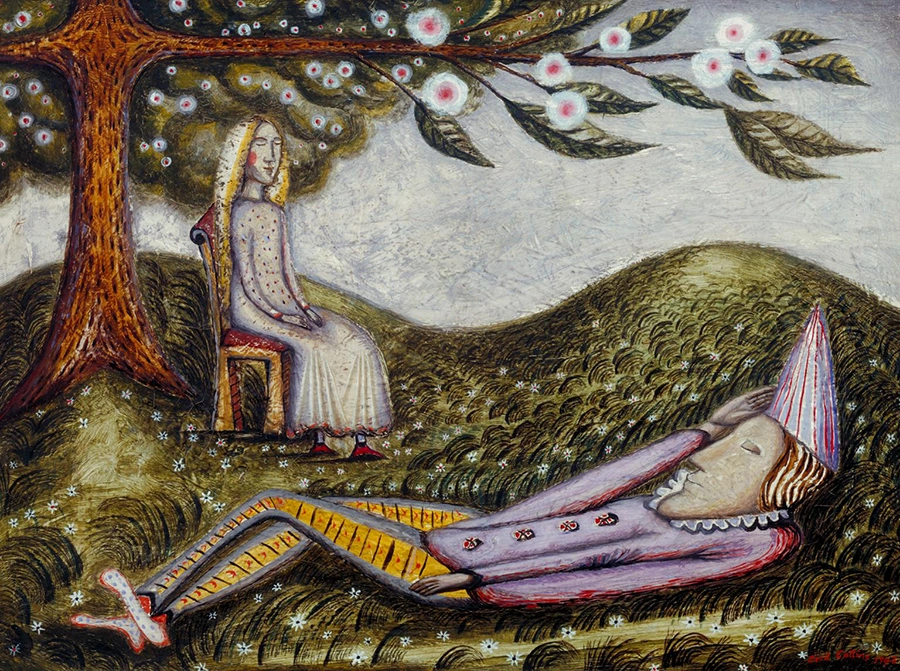
Both the painter, Cecil Collins, and the poet, Edwin Muir, enjoyed paradisial childhoods, which, though rudely interrupted, provided a sustaining sense of innocence and wonder through which they subsequently beheld the world and wove artistic practices that sought to widen and deepen consciousness into a ‘second, renewing innocence’ that was a paradise regained, which Collins referred to as the “great happiness”.
They both employed artistic, spiritual practices that deepened attention, reverenced, and used dreams and other imaginal states, and cultivated good memory to develop works of great originality and of gently transforming power that they felt could take people on a pilgrimage to their originating light, where “that strange quarry you scarcely thought you sought” would reveal itself and you would find “Yourself, the gatherer gathered, the finder found.”
Both worked, broadly, within the ‘Western tradition’, but with an openness to the Spirit that bloweth where it will, and both were sustained, nurtured, and challenged in their long, loving marriages to Elizabeth Collins and Willa Muir, both themselves artists. Both in their practices and their work, they have much to inspire us about the potential for a creative, spiritual life.
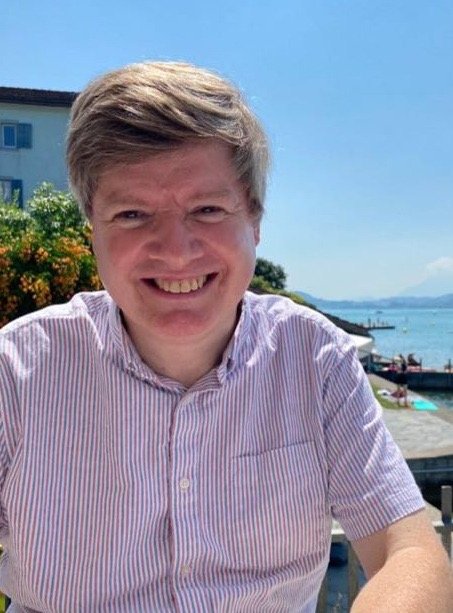
Nicholas Colloff, when not posting art on Facebook or walking through the woods, is the Director of the Argidius Foundation, a Swiss family foundation that helps develop social and environmental enterprises, principally in Africa and Latin America. He studied theology, philosophy, and the psychology of religion at university, after which he helped found the Prison Phoenix Trust that teaches meditation and yoga to people in prison, and from this discovered a gift for starting things (and leaving them in better hands so that they flourished).
This has included a microfinance bank in the Balkans, a charity focused on community mental health in poor communities in the Global South, and a social investment fund. Through the auspices of Temenos and the friendship of the poet and Blake scholar, Kathleen Raine, he was privileged to meet and know Cecil Collins in the latter years of his life, and through Kathleen to know one of Edwin and Willa Muir’s closest friends.
Plato stimulates creative thought in a variety of ways, all aimed at stimulating our non-rational as well as our rational faculties. In order to explore fundamental ethical questions about how to live and what sort of person to be, he creates dialogues involving a vibrant cast of characters (never himself), and the conversations invite us to see the connections between belief, character and life. We are enabled to form a sense of the shape, structure and narrative of a life — both models to emulate and models to avoid. The dialogues often deploy vivid imagery — such as the Allegory of the Cave in the Republic — and in much of this imagery Plato plays with gender expectations, such as the pregnant philosopher (male as well as female) in the Symposium and philosophical statecraft as the art of weaving in the Statesman. In several dialogues imaginary utopias also encourage us to envisage different ways of thinking, living and being. It is intriguing how often this agent-centred, dialogic approach, which embeds individuals in their social contexts, has appealed to women philosophers, particularly during the last 70 years, and this is a topic we shall explore.
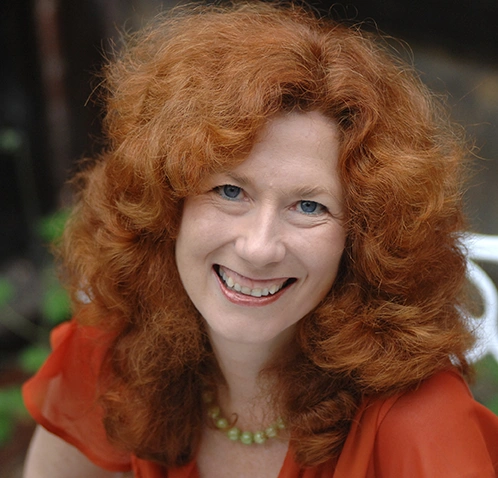
Angie Hobbs is Professor of the Public Understanding of Philosophy Emerita at the University of Sheffield. She gained a degree in Classics (First Class) and a PhD in Ancient Philosophy at the University of Cambridge, and her chief interests are in ancient philosophy and literature, and ethics and political theory from classical thought to the present, and she has published widely in these areas, including Plato and the Hero; Why Plato Matters Now was published by Bloomsbury in 2025. She contributes regularly to TV, radio, podcasts and other media around the world, including 27 appearances on In Our Time on Radio 4. She works in a number of policy sectors, including the U.K. Civil Service, National Health Service and Health Research Authority. She has spoken at the World Economic Forum at Davos, the Athens Democracy Forum, the Symi Symposium, the Houses of Parliament, the Scottish Parliament and Westminster Abbey, and been the guest on Desert Island Discs and Private Passions. She was a judge of the Man Booker International Prize 2019 and was on the World Economic Forum Global Future Council 2018-9 for Values, Ethics and Innovation.
In her talk in Paris, Karina Miotto will share her powerful journey as an environmental activist in the Brazilian Amazon — a path shaped by purpose, but also by burnout and PTSD after years of frontline work. She will speak about the transformative role Joanna Macy’s Work That Reconnects played in her healing, restoring not only her strength but also her faith in humanity. Karina will also share personal conversations she had with Joanna, highlighting how this body of work continues to deeply influence her life, her worldview, and her approach to changemaking.
Her presentation will be both motivational and inspiring. As part of her session, Karina will guide the audience through a simple experiential practice from the Work That Reconnects, inviting participants to reconnect with themselves, with each other, and with the living Earth. She believes Joanna Macy’s work offers essential tools for this moment in human history, and her talk aims to open a space of clarity, courage, and collective renewal for all who attend. Karina will also explore the vital role of Systems Thinking in the Work That Reconnects — showing how a systemic view of life deepens our understanding of interdependence, resilience, and the complexity of the times we are living through.
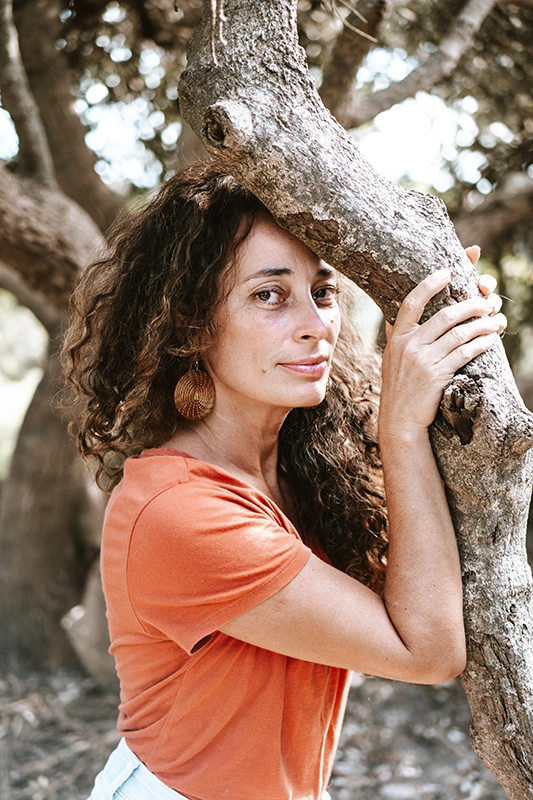
Karina Miotto is a journalist, eco-philosopher, changemaker mentor, and speaker coach. She lived for many years in the Amazon Rainforest in Brazil and worked with major NGOs. As editor of the website O Eco, she covered the nine countries of the Amazon Basin. She studied the Deep Ecology movement directly with pioneers such as Satish Kumar, John Seed, and Stephan Harding. She studied The Work That Reconnects directly with Joanna Macy.
She holds a Master’s degree in Holistic Science from Schumacher College, England. In her dissertation, titled “Reconnecting the Amazon: Awakening Deep Feelings for the Rainforest,” she developed ten different pathways to help people emotionally connect with the forest. Her findings can be applied to any landscape or environment on the planet. Her name has been cited in books and scientific articles around the world.
Karina has given talks in countries such as England, the United States, Germany, New Zealand, Chile, Australia, Portugal, Spain, and Brazil, impacting hundreds of people worldwide. Deep Ecology is currently the foundation of all her work. She lead a project on climate adaptation and community resilience in the Australian Alps using as methodology WTR and Deep Ecology for La Trobe University, Melbourne.
In 2024, she published her first book: Changemakers – the courage to transform the world: it’s beautiful, challenging, and possible to do without burning out, released by Bambual Editora (Brazil). In 2025, the same book was published in Portugal under the title A coragem de mudar o mundo – changemakers, by the same publisher.
During the same year, she collaborated with The Wellbeing Project, supporting line up curation and speaker preparation for the Hearth Summit, a global event for 1,200 changemakers from 89 countries.
Our culture treats innovation as self-justifying—as if speed, scale, and automation were enough to define progress. The humanities center imagination instead, asking not only what we can do, but what we are becoming as we do it. Through literature, philosophy, history, art, they enlarge the inner life, teaching us how to live with complexity without collapsing into cynicism or fantasy.
When John Adams wrote during the American Revolution that he studied war and politics so later generations could study philosophy and poetry, he was sharing an Enlightenment logic: the humanities as the point of self-government, not a luxury. The same settlement produced mass literacy, the modern university, the professional middle class, and the novel—a form that trained readers in moral judgment and imaginative recognition. These developments sustained one another.
That settlement is now under assault. The “dark enlightenment” and its tech patrons explicitly call for replacing democracy with neo-feudal hierarchy, governed like a corporation and insulated from public accountability. AI sits at the center of this program: prediction in place of judgment, privatized platforms in place of public institutions, and the enclosure of knowledge as a condition of power.
Imaginative literature makes the stakes legible. Poets from Coleridge onward distinguish world-making imagination from mechanical recombination, a useful lens for generative AI. Novelists like Charlotte Brontë and F. Scott Fitzgerald make imagination the predicate of liberty and autonomy, and trace what happens to hope in cultures structured by injustice. Philosophers like Hannah Arendt supply the political hinge: imagination is a precondition for politics, because politics depends on the ability to envision alternatives.
In a world of accelerating technologies and shallow attention, how do the humanities enlarge human life—and what would it take to rebuild the conditions that let them flourish?
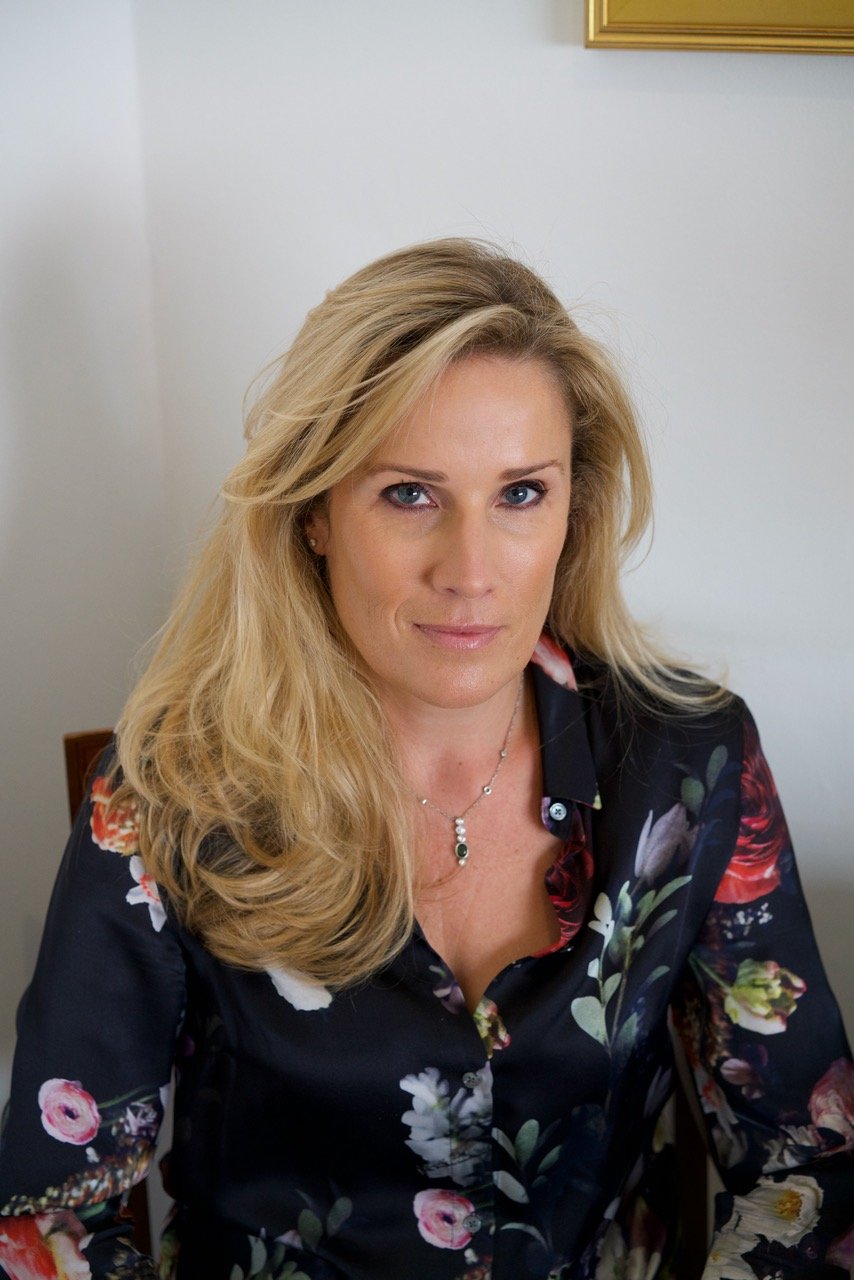
Sarah Churchwell is Chair of Public Humanities and Professor of American literature at the School of Advanced Study, University of London, where she directs the UK’s national festival of humanities research, the Being Human Festival.
She is the author of several acclaimed books, most recently The Wrath to Come: Gone with the Wind and the Lies America Tells (2022). She comments widely on politics, culture, and art in print, television, radio, and film. She has been a winner of the Eccles British Library Writer’s Award, longlisted for the Orwell Prize for Journalism and named one of Prospect magazine’s Top 50 World Thinkers.
She is co-host with historian David Olusoga of the Goalhanger podcast Journey Through Time.
Who's coming?
2 people are attending Creation and Life Itself