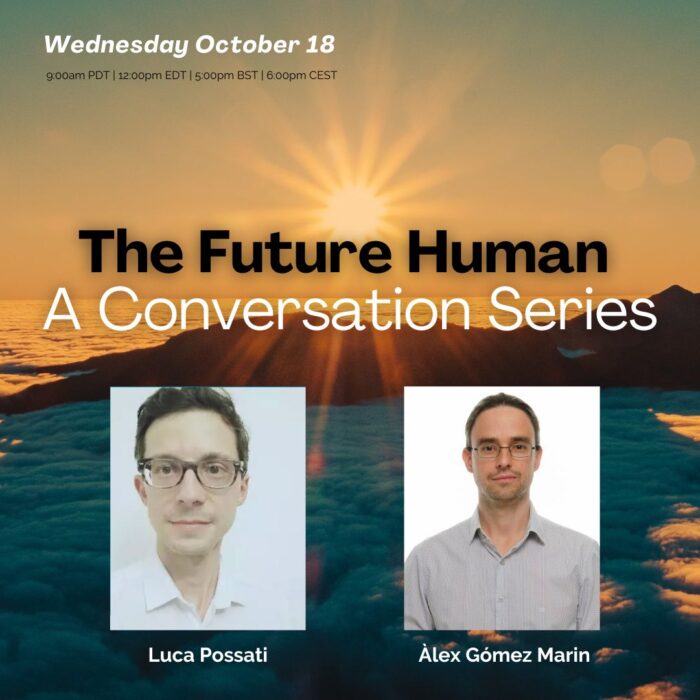
The Future Human – A Conversation with Luca Possati
OnlineThe tenth conversation in this series will be on Wednesday October 18, 2023 with Luca Possati. Our conversation will orbit around “AI and psychoanalysis”.

The tenth conversation in this series will be on Wednesday October 18, 2023 with Luca Possati. Our conversation will orbit around “AI and psychoanalysis”.

In this online series we will revisit Galileo’s book, The Assayer, on the occasion of the 400th anniversary of its publication this very month of October.
Written as a letter in a controversy about the nature of comets, such a foundational text in the history of modern science deserves to be more widely known and read. It contains one of the first and clearest articulations of the scientific method, the famous claim about the mathematical intelligibility of nature, and Galileo’s emphasis on epistemic humility in the face of dogma and authority. Remarkably, in the book we also find Galileo’s programmatic exclusion of consciousness from the purview of science, whose consequences we are still wrestling with today.
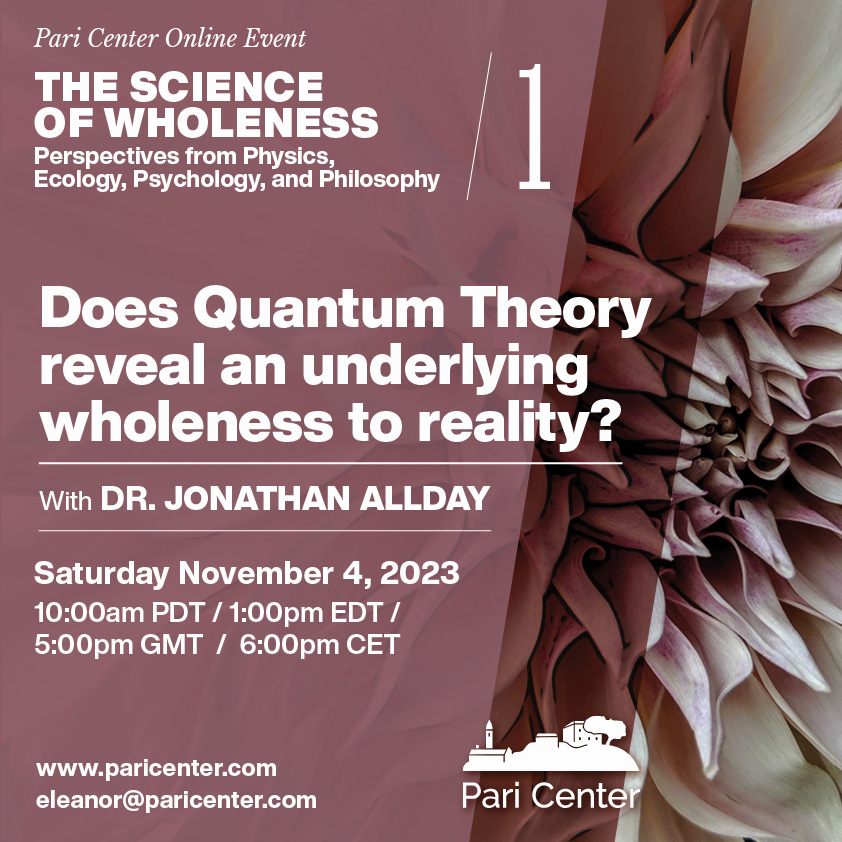
In the 1970s, a series of books, such as The Tao of Physics and The Dancing Wu Li Masters, explored the supposed synergies between quantum theory and the wisdom traditions. These well-meaning books spawned something of an industry and associated quantum hype where quantum theory was portrayed as supporting, or worse justifying, certain worldviews.
Typically, these approaches drew on the Copenhagen interpretation, the idea that the mind causes quantum state collapse and the physics of entanglement and related them to the experience of non-duality, wholeness and immersion in a universal mind characteristic of spiritual insight.
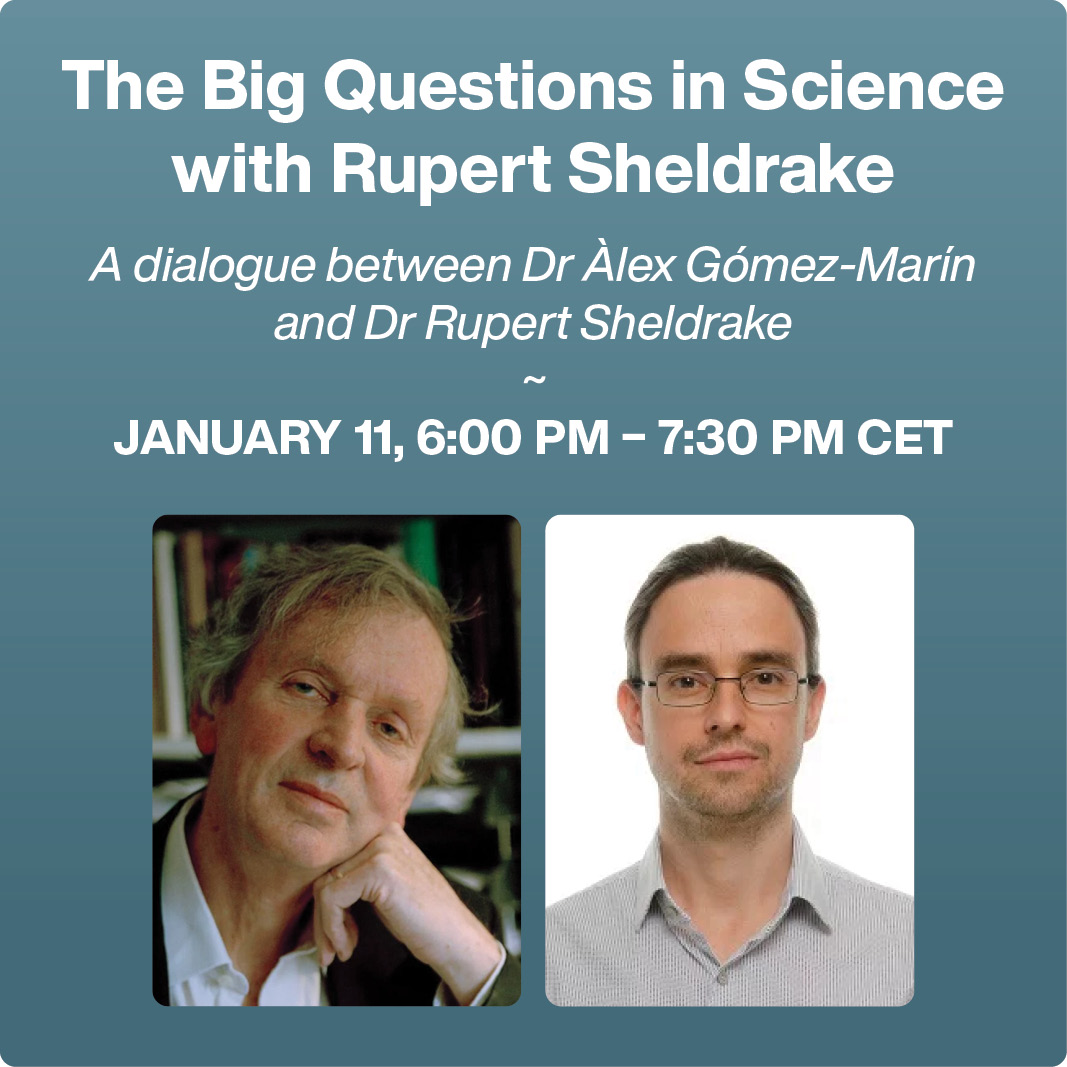
Rupert Sheldrake argues that the sciences are being constricted by ten assumptions that have hardened into dogmas. In this course he turns the dogmas into questions and examines them scientifically in the light of advances in the sciences themselves. For example, the dogma that nature is mechanical becomes the question “Is nature mechanical?”; the dogma that matter is unconscious becomes “Is matter unconscious?”; the dogma that minds are confined to brains becomes “Are minds confined to brains?”
The Blackwinged Night: Creativity in Nature and Mind, by F. David Peat. Host: Alison MacLeod
An informal monthly get-together to discuss books of significance for the Pari Center community.

This two-day, six-hour workshop is hands-on, and fully participatory. Each participant will need to acquire a new “found stone” (not store-bought) and work with that stone in ways specific to the workshop. In addition, each participant will give a brief report to the whole group, on Zoom, of what occurs when working with their found stone.
The conversation will explore “a landscape of consciousness”, toward a taxonomy of explanations and implications. Dr. Robert Lawrence Kuhn is a public intellectual; he is the creator, writer, host and executive producer of Closer To Truth, the long-running PBS/public television series and leading global resource on Cosmos (cosmology/physics, philosophy of science), Consciousness (brain/mind, philosophy of mind), Life (philosophy of biology), and Meaning (theism/atheism/agnosticism, global philosophy of religion, critical thinking).
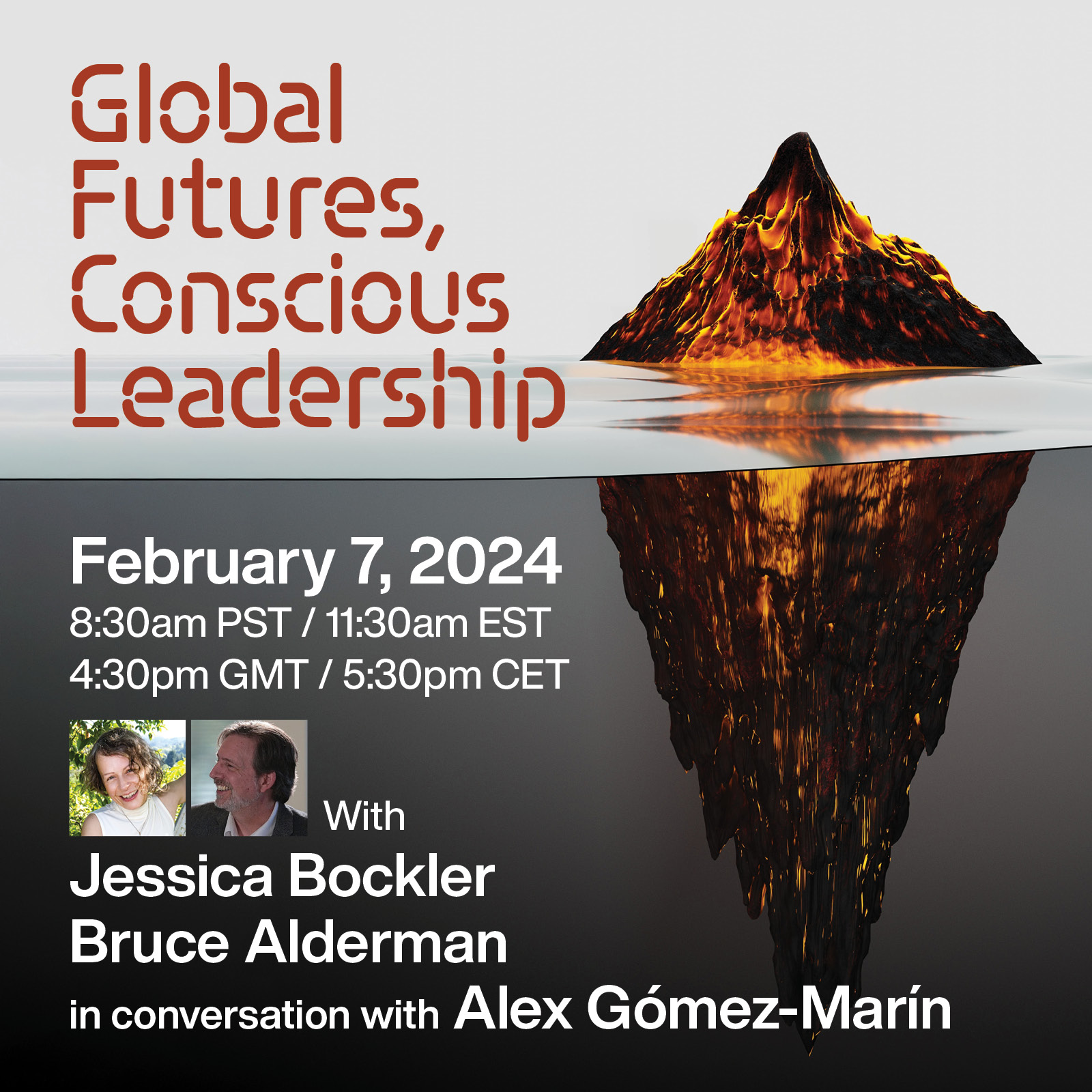
As Alfred North Whitehead put it, the world “craves for novelty and yet is haunted by terror at the loss of the past”. We feel we urgently need change but we seem unable to make it happen, at least at the speed, precision, and depth required for it to make a real, positive, and effective difference in the world. In this free live event Àlex Gómez-Marín will be in conversation with Jessica Bockler (Alef Trust) and Bruce Alderman (California Institute of Integral Studies) in the context of their respective new programmes which seek to promote, with the same spirit but in different ways, conscious leadership and conscious change-making in ourselves and the world.
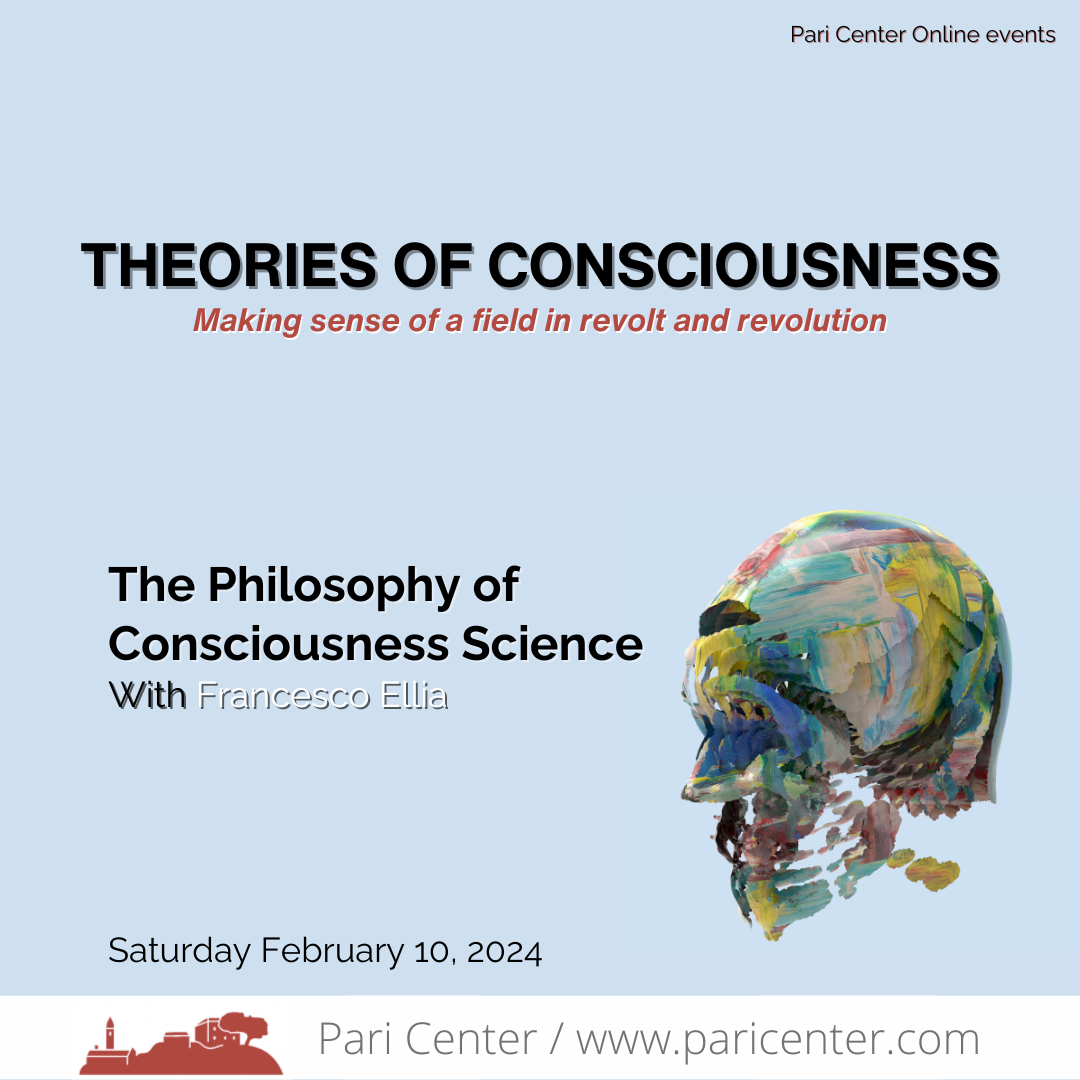
In his seminal 1884 observation, Thomas Huxley likened the enigma of consciousness and its relation to nervous tissue to the inexplicable emergence of a djinn from Aladdin’s magic lamp. This metaphor strikingly encapsulates the persistent complexity of what is now known as the mind-body problem. Despite the exponential growth in our scientific understanding, particularly of the brain, we find ourselves scarcely closer to unraveling this mystery than in Huxley’s time.

Celebrating the 10th Anniversary of the “Manifesto for a Post-Materialist Science”
with Karalee Kothe, Lisa Miller, Lorne Schussel, Gary E. Schwartz, Laurel Waterman, Marjorie Woollacott