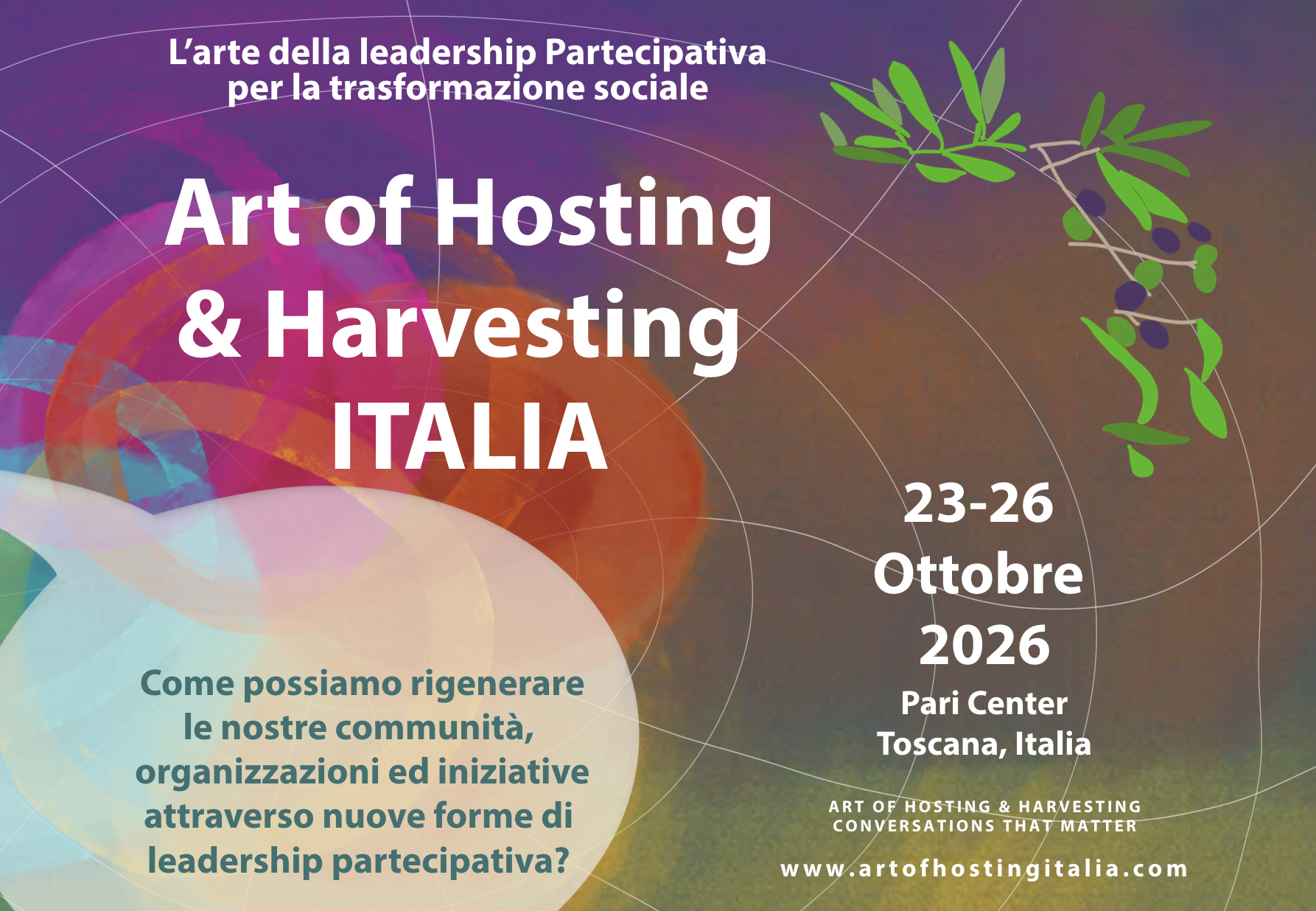
Art of Hosting 2026
Un’esperienza immersiva per esplorare pratiche di leadership partecipativa, facilitazione e intelligenza collettiva.

Un’esperienza immersiva per esplorare pratiche di leadership partecipativa, facilitazione e intelligenza collettiva.
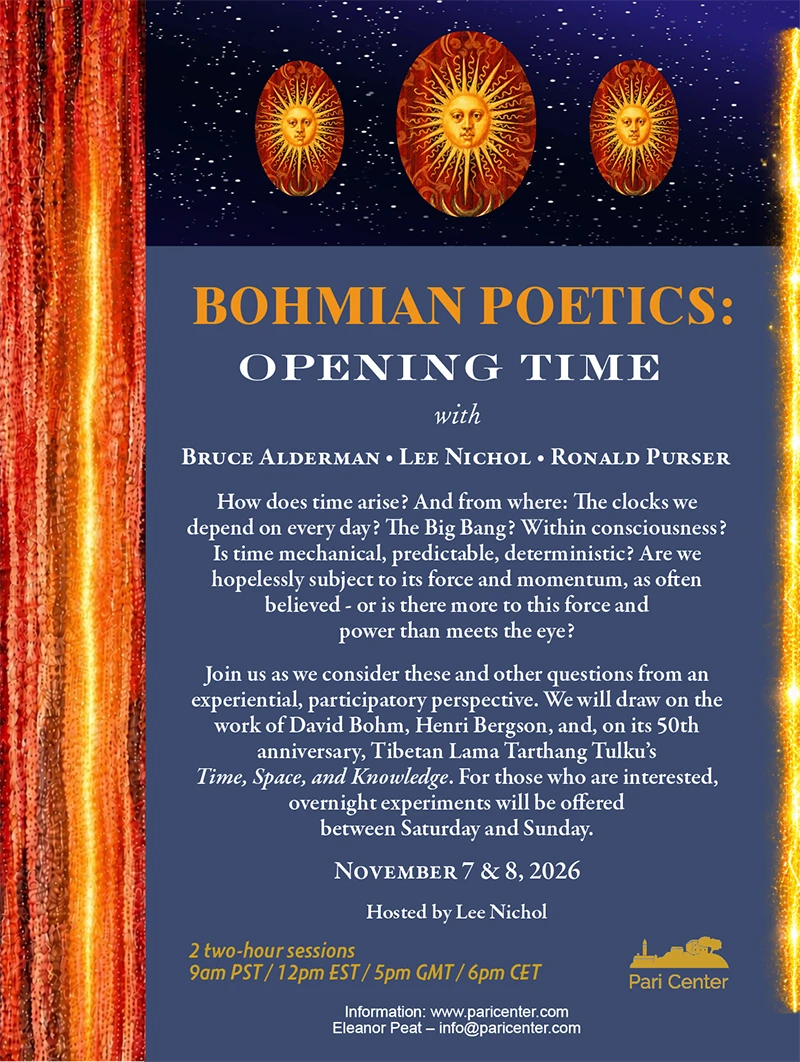
This second installment of Bohmian poetics will take up the question of time, from a participatory perspective. How does time arise in experience – and from where? What is involved in foregrounding our tacit assumptions about the nature of time, and what value might lie therein?
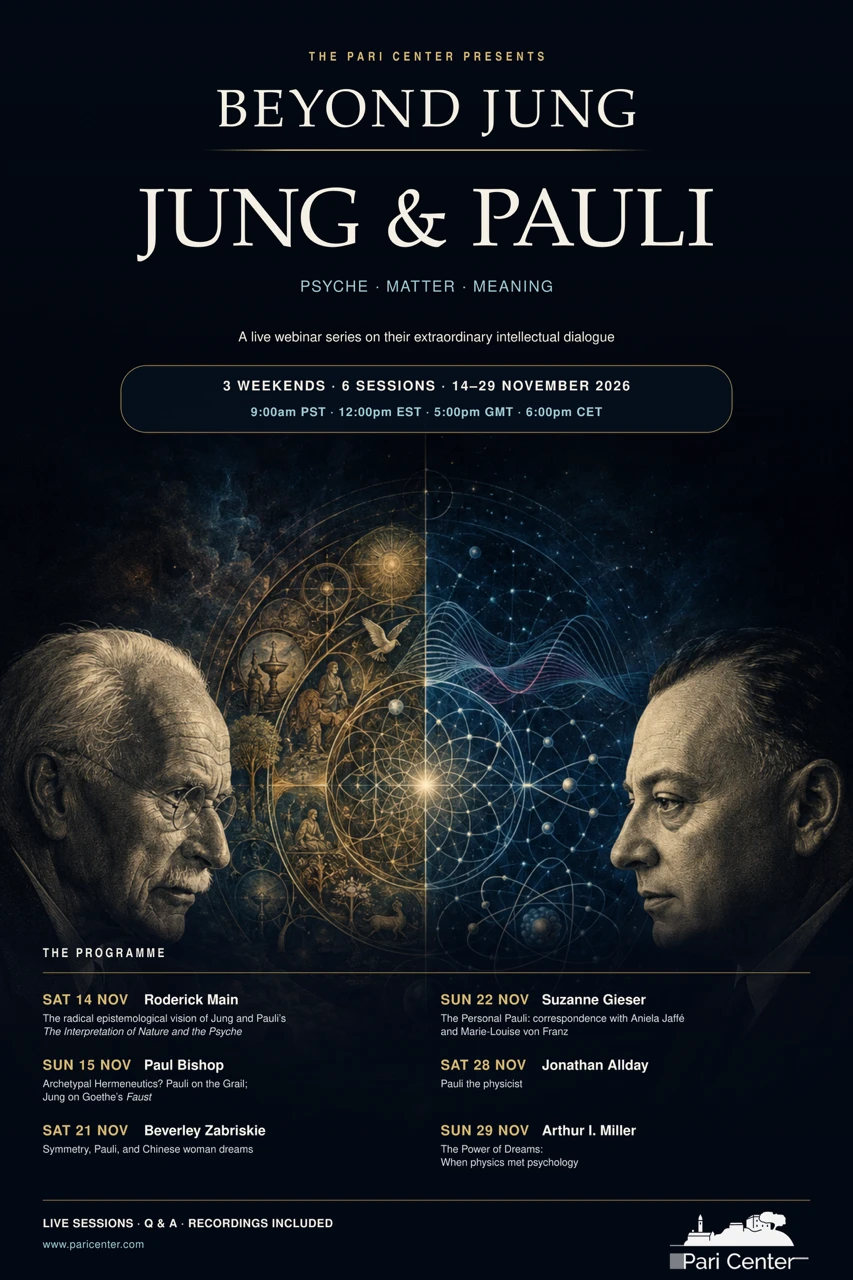
A six-part online series over three weekends exploring the remarkable encounter between C.G. Jung and Wolfgang Pauli, and their shared search for a deeper understanding of psyche, matter and meaning.
Beyond Jung: Jung and Pauli 1/6 The Radical Epistemological Vision of Jung and Pauli’s The Interpretation of Nature and the PsycheWith Roderick Main Saturday November 14, 20269:00 am PST | 12:00 pm EST | 5:00 pm GMT | 6:00 pm CET This session is two hours. All registered participants will receive access to the recordings, […]
In many ways, the twentieth century was the century of interpretation—or, to give it its technical name, hermeneutics. This session will examine the question of interpretation for Wolfgang Pauli and C.G. Jung alike, discussing (a) Pauli’s interest in the Grail myth as reflected in his correspondence with Emma Jung and (b) Jung’s interpretation of Pauli’s dreams in relation to his own pursuit of alchemical themes in Goethe’s Faust.
Two intellectual giants, the Nobel Laureate quantum physicist Wolfgang Pauli, although 25 years younger, and the Swiss psychiatrist and analyst, C.G. Jung, exchanged thoughts and feelings about the nature of realities through vibrant letters and their thesis of synchronicity.
Beyond Jung: Jung and Pauli 4/6 The Personal Pauli: Topics in the Correspondence with Aniela Jaffé and Marie-Louise von Franzwith Suzanne Gieser Sunday November 22, 20269:00 am PST | 12:00 pm EST | 5:00 pm GMT | 6:00 pm CET This session is two hours. All registered participants will receive access to the recordings, so […]
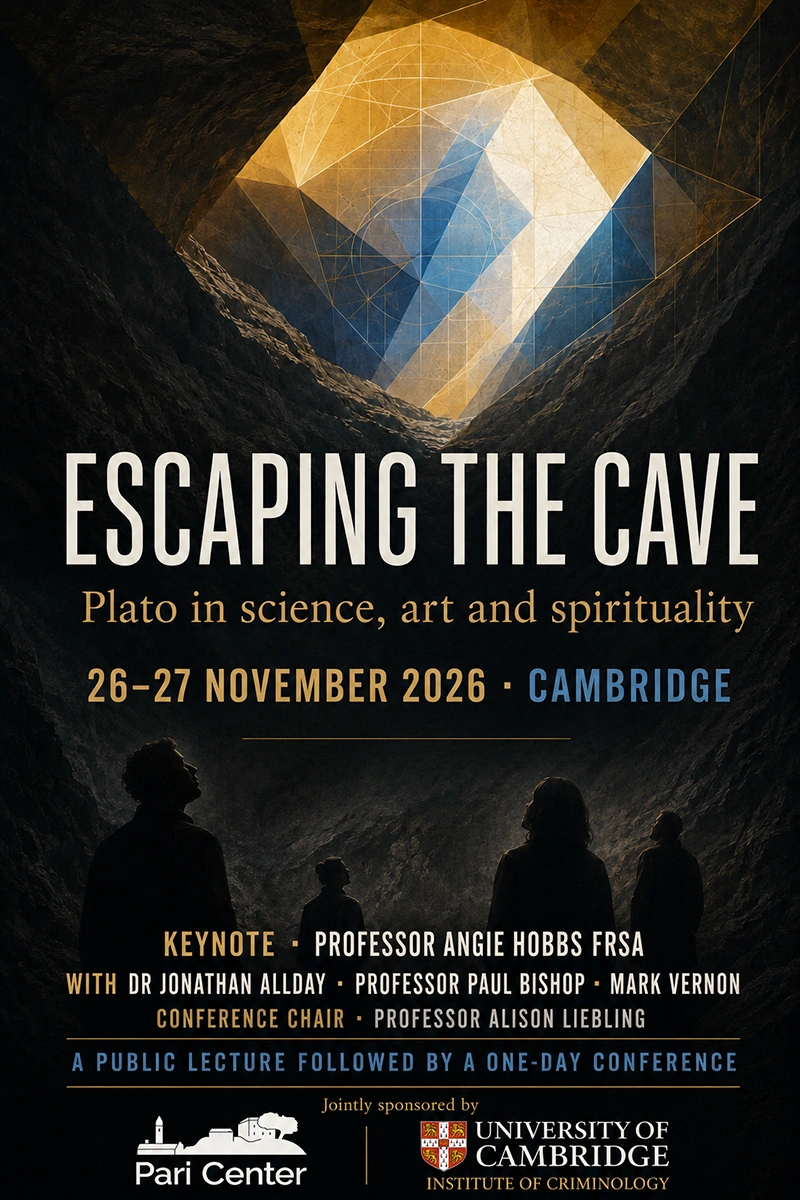
Plato’s metaphor of the cave, an underground vault where back-lit humans observe life’s goings on as a play of shadows on a wall, has long held a fascination for thinkers. It suggests that the world we experience in our day-to-day business is not all that there is. Rather it arises from structures that are less substantial to our senses, but equally real, existing in a layer of reality beneath the commonplace. Philosophically, the mainstream has moved away from Neo-Platonism, but suggestions from quantum mechanics, mathematics and other aspects of science, along with the philosophy of mind and some modern thinking on aesthetics, ethics and morality, suggest that Plato’s ideas are worth revisiting.
An accessible introduction to the physics of Wolfgang Pauli, his contributions to the subject and a little about Pauli the man.
Most physicists are adamant that they don’t make discoveries while dreaming. Wolfgang Pauli was different because from Carl Jung he learned the power of dreams. This enabled him to discover CPT symmetry, a higher form of mirror symmetry, a key factor in Jung’s work. Pauli and Jung believed that physics and psychology were mirror images. I will develop Pauli’s important discovery and more.