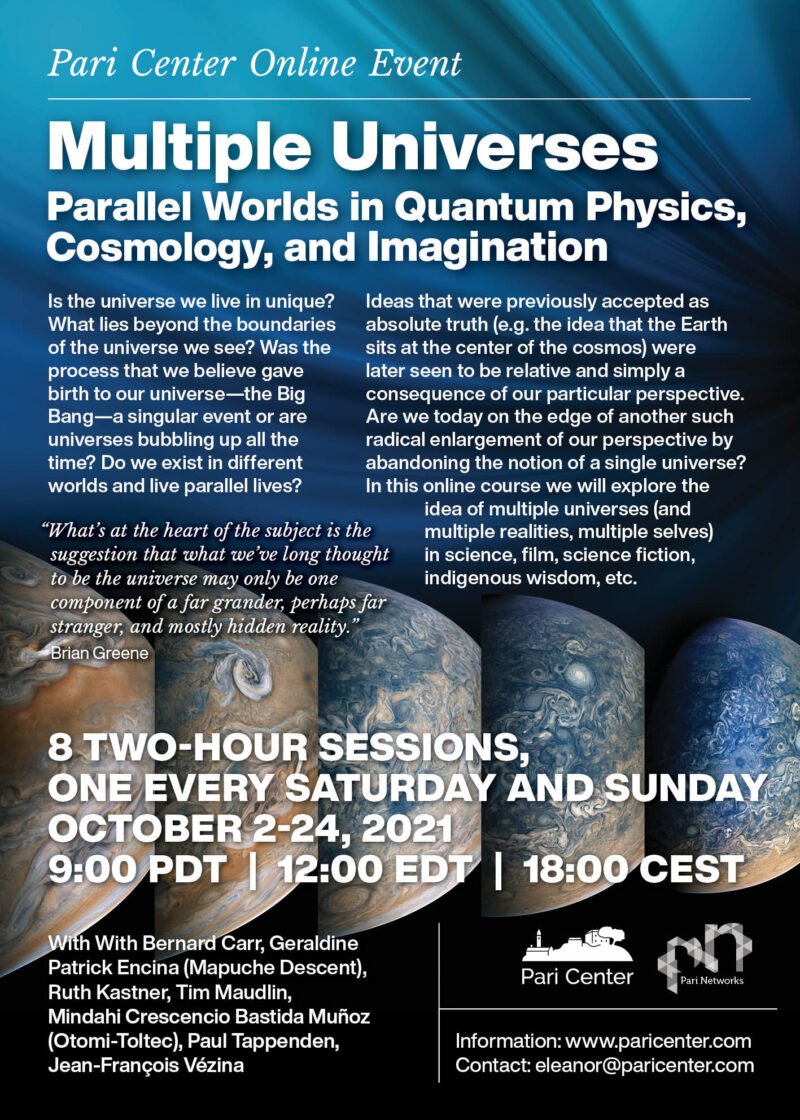
• Closing Panel: Multiple Universes

    Multiple Universes
    Online

    A panel discussion with some of the speakers of the Multiple Universes series will close the event, reflecting on the various perspectives that have emerged in the presentations and comparing different world views.

    The session will begin by posing the panelists a few key questions to start the discussion. It will continue as a Q&A session open to everybody. You are invited to have your questions and comments ready, and in formulating them please be mindful of other people’s need to ask their own questions! The best questions are often the most concise ones.

    €18,00
  • The Consciousness of Neuroscience

    The scientific study of consciousness used to be taboo just a few decades ago, but it is now in its heyday. Consciousness research captures the imagination of laypeople, attracts research funding, and sells books. Amongst neuroscientists, the dominant position is this: whatever consciousness is, it must somehow emerge somewhere in the brain. Where else could it be? The challenge then is to find out how subjective experience springs from neural activity. But does it? By what kind of modern alchemy is the water of the matter supposed to be transformed into the wine of experience? We are never told. Instead, materialism excels at selling old metaphysical commitments as new scientific data. In addition, materialism is promissory by necessity: the grand resolution is at hand but always lies ahead – the best is yet to come.

    Free
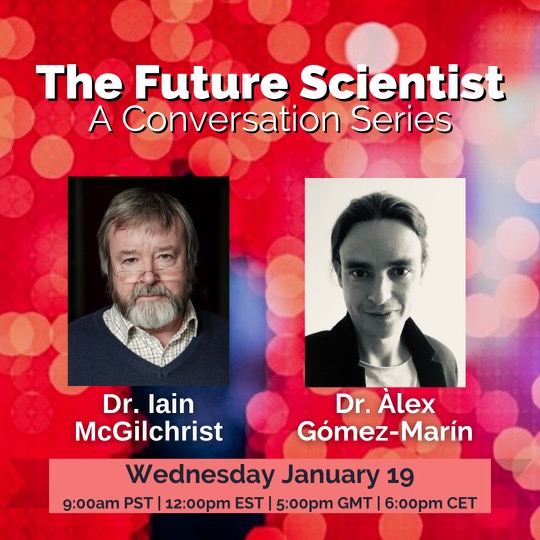
  • The Future Scientist – A Conversation with Dr. Iain McGilchrist

    The Future Scientist – A Conversation Series
    Online

    Some likely topics that may emerge in this first conversation involve (i) the need of synthesis in the face of piles of analytic studies, (ii) the pursuit of convergence from different lines of inquiry (such as neurology, philosophy, and physics), and (iii) the constraints, both challenges and opportunities, of doing research with and without current academia.

    €5,00
  • A Conversation about Duality and Non-duality in East and West

    Dualities
    Online

    Our primary subjective experience is one of duality, of experiencing the separateness of self and the rest of the world around us. This informs how we live and perceive the world, the knowledge and institutional systems we have created throughout history and as we continue to do so in the present.

    On the other hand, some Eastern systems and mystics of all religions have insisted on the fundamental non-duality of the world. In India for instance, the belief in the discrete disconnected egoic self is seen as epitomizing ignorance and the root cause of suffering. The experience of nonduality liberates and transforms one’s existence. The Tao in Chinese philosophy is the symbol and experience of integration and wholeness, nonduality beyond duality, undergirding the universe. In our contemporary times the insights and explorations into nonduality have been coming through Quantum physics; consequently, initiating much needed dialogues between science and spirituality.

    €15,00
  • An Introduction to Gregory Bateson’s Ecology of Mind

    Online

    Jon Goodbun’s research focuses on ‘ecological thinking’—both in terms of how we think about ecological systems, and how ecological systems themselves think—drawing in particular on his extensive study of the work of the ecological anthropologist Gregory Bateson. In this talk Goodbun will introduce some of the history and thinking of this important theorist, drawing in particular upon some of the ideas contained within his first collection of essays: Steps to an Ecology of Mind, as well as his later synthesis: Mind and Nature—A Necessary Unity, and his final incomplete text, published after his death by daughter Mary Catherine Bateson, called Angels Fear—Towards an Epistemology of the Sacred, and will situate these ideas in relation to more recent research, and the wider research interests of the Pari Center.

    Free
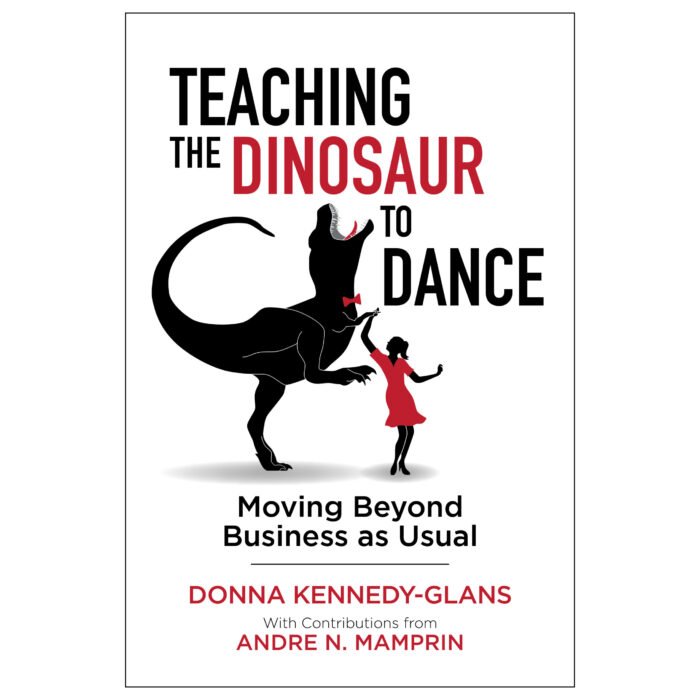
  • Teaching the Dinosaur to Dance: Moving Beyond Business as Usual

    Online

    Donna’s latest book Teaching the Dinosaur to Dance provides the roadmap builders and rebuilders—of society and of enterprise—with the tools to rethink, redesign and revitalize their organizations and to remain relevant and sustainable in a new and very different future. Business as usual is extinct. Disruption and social pressure are the new norm and change is inevitable for enterprises of all kinds—businesses, governments, non-profits, community initiatives and social institutions. We’ve reached a turning point and it’s time to evolve, or we go the way of the dinosaurs. We all need to act now to survive and find new ways to thrive in a changed world. But in an age of polarized debates on complex issues (such as fairness and climate change), how can leaders find a new way forward? How can enterprises re-invent themselves to make capitalism work better for more people? These are some of the compelling and timely issues that Donna and Julie will tackle in their conversation.

    Free
  • Temporality and Tragedy: Irrevocable Loss and Redemptive Love

    Love in the Time of Crisis
    Online

    A. N. Whitehead’s Process and Reality can be read as a sustained meditation on Locke’s characterization of time as ‘perpetual perishing.’ But he refuses to see time solely as an occasion of perishing. Colapietro will seize this occasion itself to reflect on time and tragedy. Is time by its very nature tragic, entailing the irrevocable loss of whatever emerges and, for a time, endures in its flux? Or is time a site wherein forms of ‘ immortality’ are attainable? But of even more basic concern are several different senses of time, above all, the time envisioned by the most influential physicists (including Einstein) and the conception of time implicit in the activity of physicists themselves. Are physicists in time in the same sense that they so often conceive time (specifically, time as a reversible process or even an illusory phenomenon)?

    €100,00