
• The Consciousness of Neuroscience

    The scientific study of consciousness used to be taboo just a few decades ago, but it is now in its heyday. Consciousness research captures the imagination of laypeople, attracts research funding, and sells books. Amongst neuroscientists, the dominant position is this: whatever consciousness is, it must somehow emerge somewhere in the brain. Where else could it be? The challenge then is to find out how subjective experience springs from neural activity. But does it? By what kind of modern alchemy is the water of the matter supposed to be transformed into the wine of experience? We are never told. Instead, materialism excels at selling old metaphysical commitments as new scientific data. In addition, materialism is promissory by necessity: the grand resolution is at hand but always lies ahead – the best is yet to come.

    Free
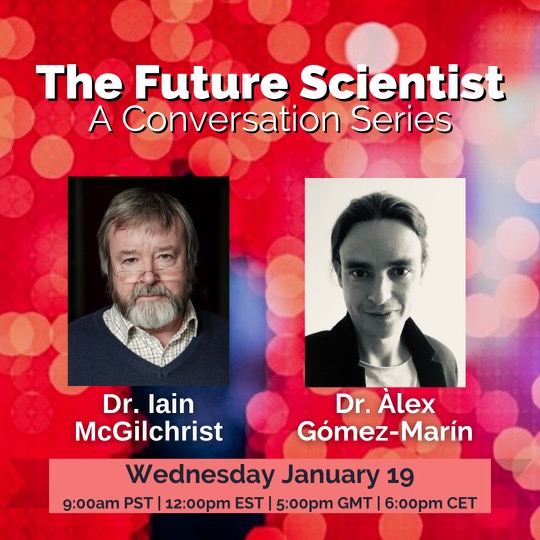
  • The Future Scientist – A Conversation with Dr. Iain McGilchrist

    The Future Scientist – A Conversation Series
    Online

    Some likely topics that may emerge in this first conversation involve (i) the need of synthesis in the face of piles of analytic studies, (ii) the pursuit of convergence from different lines of inquiry (such as neurology, philosophy, and physics), and (iii) the constraints, both challenges and opportunities, of doing research with and without current academia.

    €5,00
  • Musical Borrowing: Theft or Tribute?

    The Quintessence of Music
    Online

    The practice of appropriating a musical phrase, a motivic idea, a concept, or even an entire melodic line as material for a “new” musical composition is as old as music itself. Composers from Johann Sebastian Bach (and before) to the present day have mined hymns, folk music, the clickety-claque of train trucks on the rails, and the work of other composers (who may have borrowed from others themselves!) in the process of creating their own sonatas, cantatas, symphonies, and suites.

    Free
  • A Conversation about Duality and Non-duality in East and West

    Dualities
    Online

    Our primary subjective experience is one of duality, of experiencing the separateness of self and the rest of the world around us. This informs how we live and perceive the world, the knowledge and institutional systems we have created throughout history and as we continue to do so in the present.

    On the other hand, some Eastern systems and mystics of all religions have insisted on the fundamental non-duality of the world. In India for instance, the belief in the discrete disconnected egoic self is seen as epitomizing ignorance and the root cause of suffering. The experience of nonduality liberates and transforms one’s existence. The Tao in Chinese philosophy is the symbol and experience of integration and wholeness, nonduality beyond duality, undergirding the universe. In our contemporary times the insights and explorations into nonduality have been coming through Quantum physics; consequently, initiating much needed dialogues between science and spirituality.

    €15,00
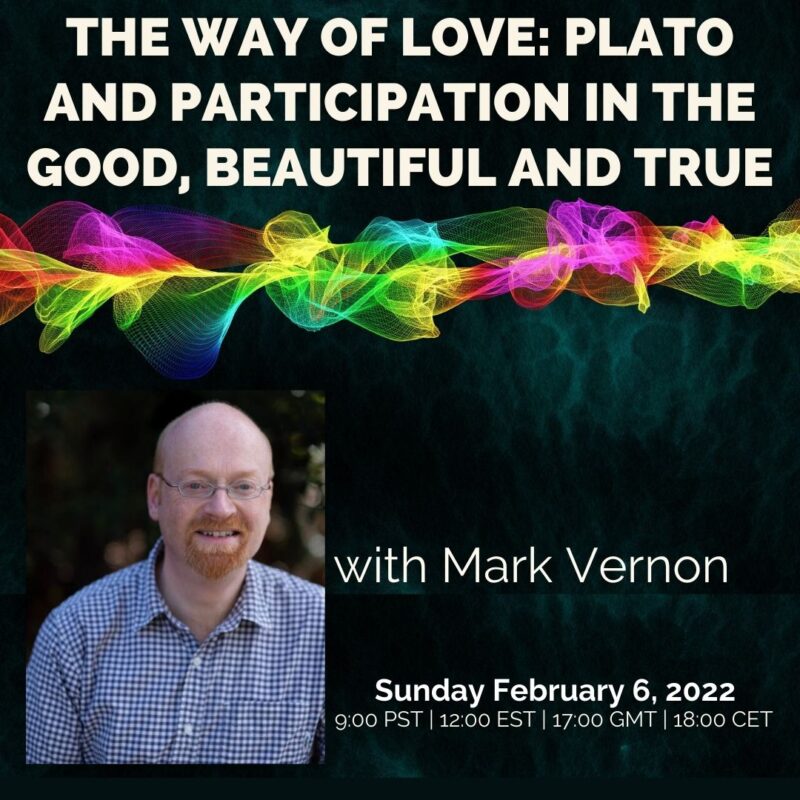
  • The Way of Love: Plato and Participation in the Good, Beautiful and True

    Dualities
    Online

    Though Plato is often accused of dualism, the word itself didn’t exist in his time, which points to a subtler and crucial reassessment of what the Ancient Greek philosopher was driving at. He recognised that the body and death are sites of experience within which we can know of their seeming opposites, namely life itself. This realisation is gained by fostering the capacity to love. We will also consider how early Platonic thought developed with Neoplatonic and theistic perceptions.

    €15,00
  • Duo Duels on Non-duality, the Quantum Potential, and the Nature of Consciousness

    Dualities
    Online

    Join quantum physicist Basil Hiley and Pari Center’s Jena Axelrod in a dynamic discussion on the structure of our universe, the quantum potential, the nature of consciousness, and the paradigm shift they both see as being necessary in the West.

    Nondual philosophy teaches that, ‘the multiplicity of the universe is reducible to one essential reality.’ The conclusion is that reality is a dynamic process accessible and known to people through music, art, transpersonal psychology, Buddhism, physics, and many more, if not all, fields. The Western worldview favours the mechanistic, static, ridgid, and as such has lost the sense of dynamism, and interconnectedness prevalent in most indigenous cultures, Eastern philosophies, and in the science of the quantum potential.

    €15,00
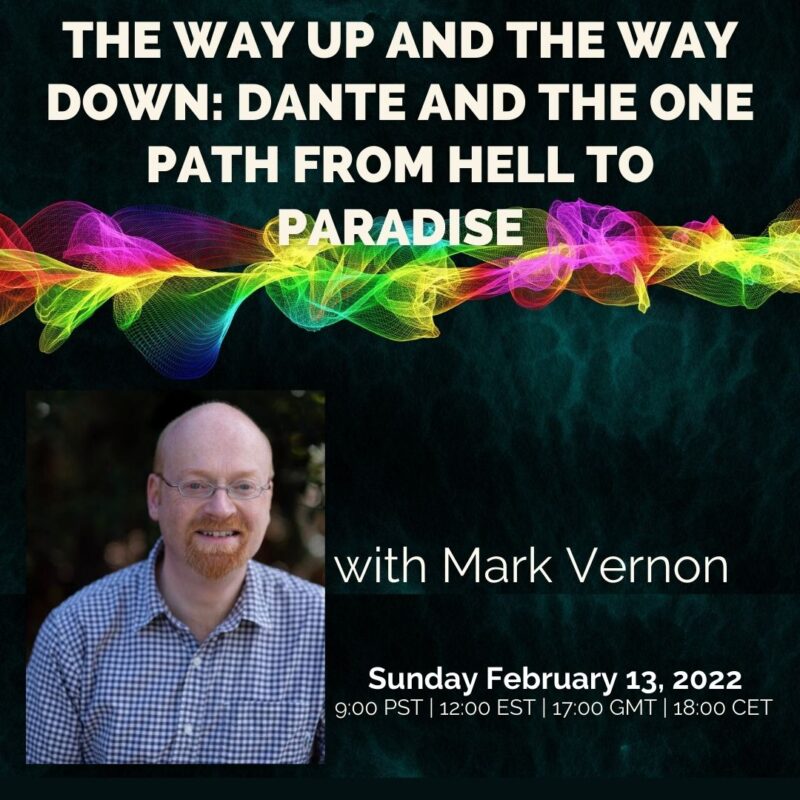
  • The Way Up and the Way Down: Dante and the One Path from Hell to Paradise

    Dualities
    Online

    Dante’s Divine Comedy famously opens with the poet wakening in a dark wood. His life has seemingly taken a wrong turn. But why must he embark first on a journey through hell, before ascending Mount Purgatory, only then entering paradise? What has the way into darkness to do with the way into light? He learns to say ‘yes’ to all of reality, and that the light includes the darkness, even as tragedy is integrated into the comedy of divine life.

    €15,00