Remembering Jacobo Grinberg at 30
Watch the recording Donate to the Pari Center We could not exist without the generosity of our supporters, sponsors and friends. Donate even a small amount, to help support us […]
Free

Watch the recording Donate to the Pari Center We could not exist without the generosity of our supporters, sponsors and friends. Donate even a small amount, to help support us […]
Dr. John Vervaeke, an award-winning professor of psychology, cognitive science, and Buddhist psychology at the University of Toronto, brings a wealth of academic expertise to his courses. With a Ph.D. in Philosophy from the University of Toronto, Dr. Vervaeke served as the former Director of Cognitive Science and holds the position of Associate Professor in the Department of Psychology. He has won and been nominated for several teaching awards and has published articles on relevance realization, general intelligence, mindfulness, flow, metaphor, and wisdom.
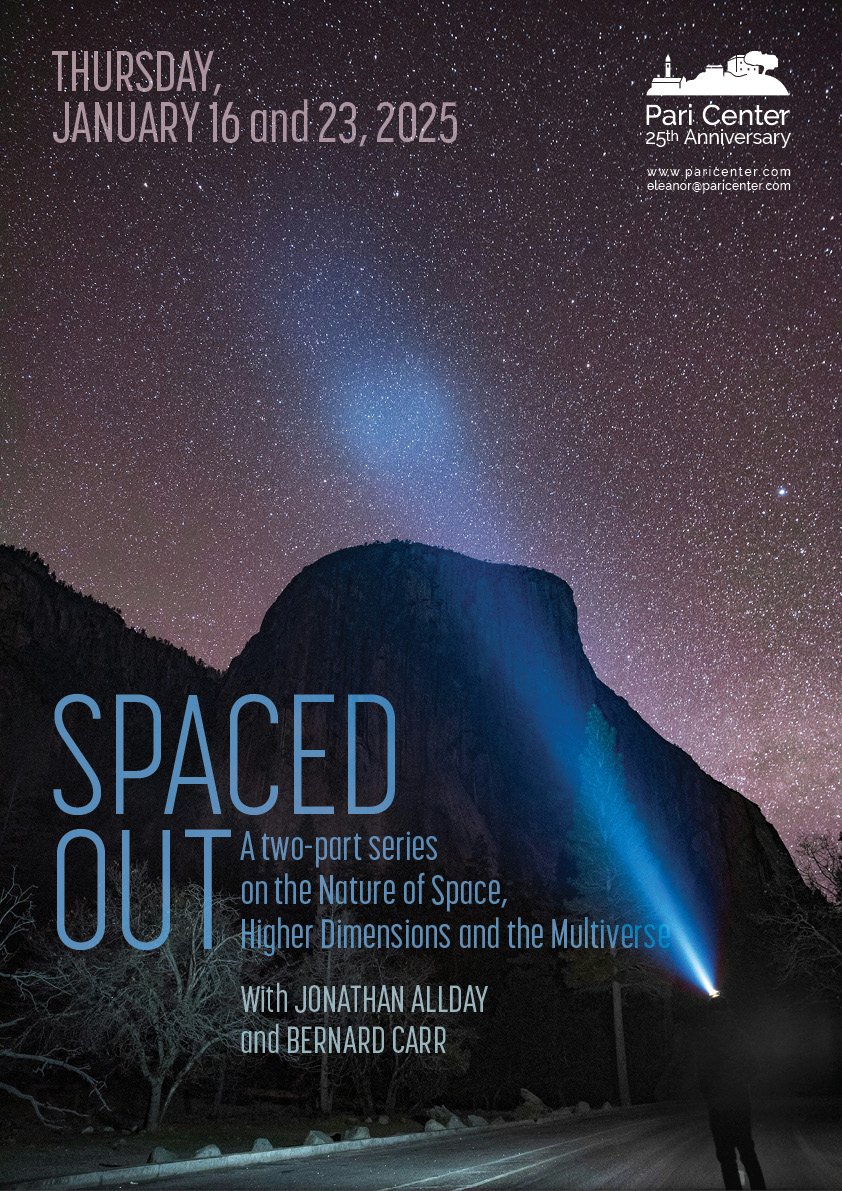
A two-part series on that Nature of Space, Higher Dimensions and the Multiverse.
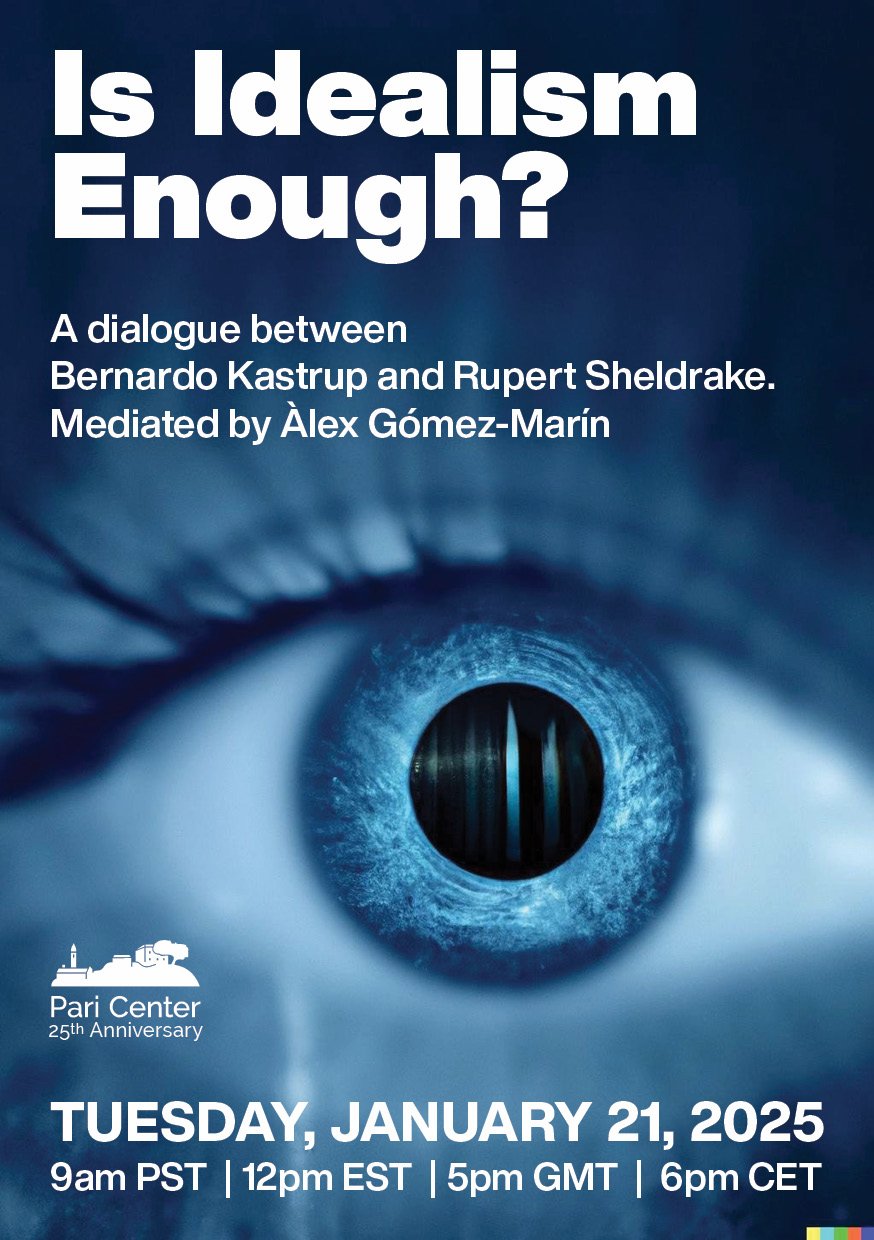
Rupert Sheldrake recently made a series of criticisms of Bernardo Kastrup’s Analytic Idealism on Curt Jaimungal’s Theories of Everything channel. Kastrup soon responded to Rupert’s points and subsequently Rupert sent Kastrup a rejoinder. Here, in a spirit of true collegiality and intellectual pursuit, we will turn this clash into an opportunity to better understand each other’s position and inquire further into the nature of reality itself. The trialogue between Kastrup, Sheldrake, and Gomez-Marin will be followed by Q&A from the audience.
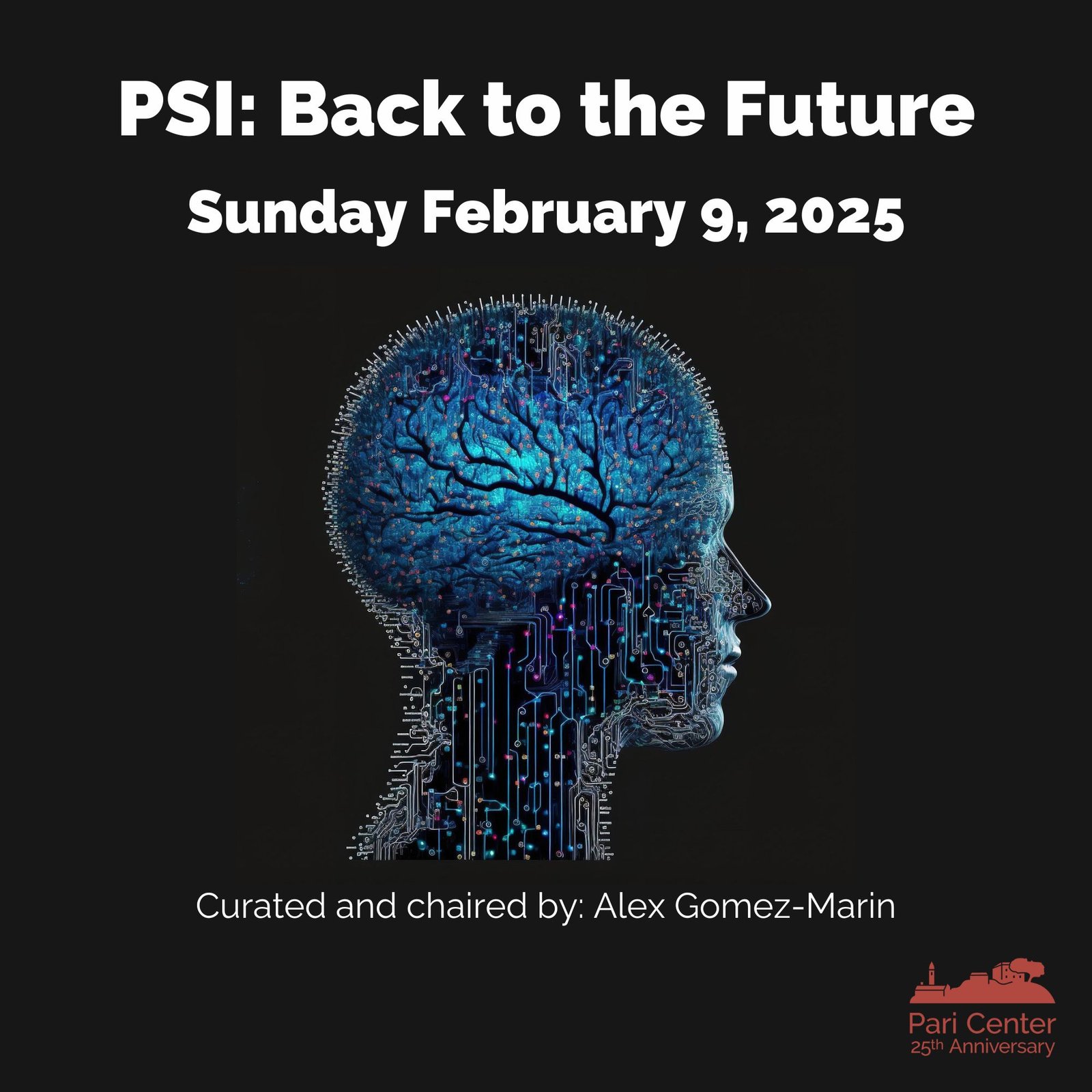
The scientific study of psychic (or PSI) phenomena –which includes extrasensory perception, precognition, synchronicity, direct mind-to-mind communication, or mind-matter interactions– has been going on for more than a century now. Its results are fascinating, puzzling, and often controversial. In this event some of the greatest active researchers in the field will present their own work while reflecting on where PSI has been, where we think it is now, and where we wish it to go. We hope to create an unprecedented audiovisual gathering for current and future generations to get perspective, clarity, and inspiration.

John Briggs and David Peat wrote Looking Glass Universe in the wake of publishing events such as The Tao of Physics. At the time, physics was cool and popular, especially among New Age adherents looking to science to provide a context for their beliefs. The authors wanted to take different approach—to show how a range of sciences, not just physics, were converging on a new way of viewing the world: as a whole. In this context, they wanted to pose and answer the question: is a science of wholeness possible?
Now that the book is about to be re-released, it is interesting to review how things stood at the time, with one of the original authors, so that progress, or lack of, since then can but seen in context.
This will act as an introduction to the whole series.

“The Edge of Belief” is a documentary film about the interplay of faith, imagination and science. The film looks at the modern UFO phenomenon through the lens of the Catholic theological, scientific and literary tradition. This impactful documentary gives viewers a holistic framework for thinking about the mysteries of the universe and dealing with the claims that we are not alone in it. “The Edge of Belief” features interviews with CS Lewis scholar and Oxford professor Michael Ward, religious studies researcher and author of American Cosmic, Diana Pasulka, icon artist and host of “The Symbolic World,” Jonathan Pageau, Notre Dame theologian Christopher Baglow, and Chair of Astronomy at Cornell, Jonathan Lunine, among others.
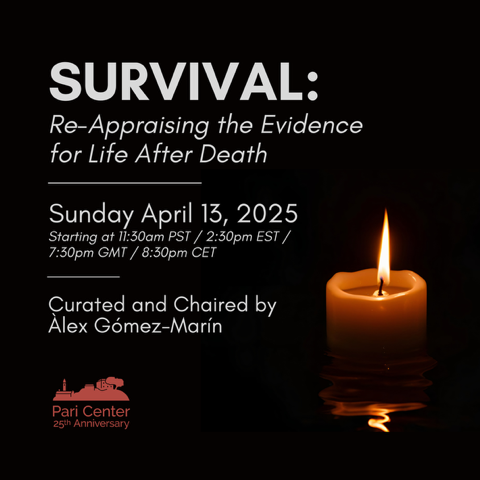
SURVIVAL: Re-Appraising the Evidence for Life After Death brings together world-renowned experts to explore the latest research, theories, and firsthand accounts that challenge conventional assumptions. This online event is an essential opportunity to engage with cutting-edge insights into what might lie beyond the final frontier.
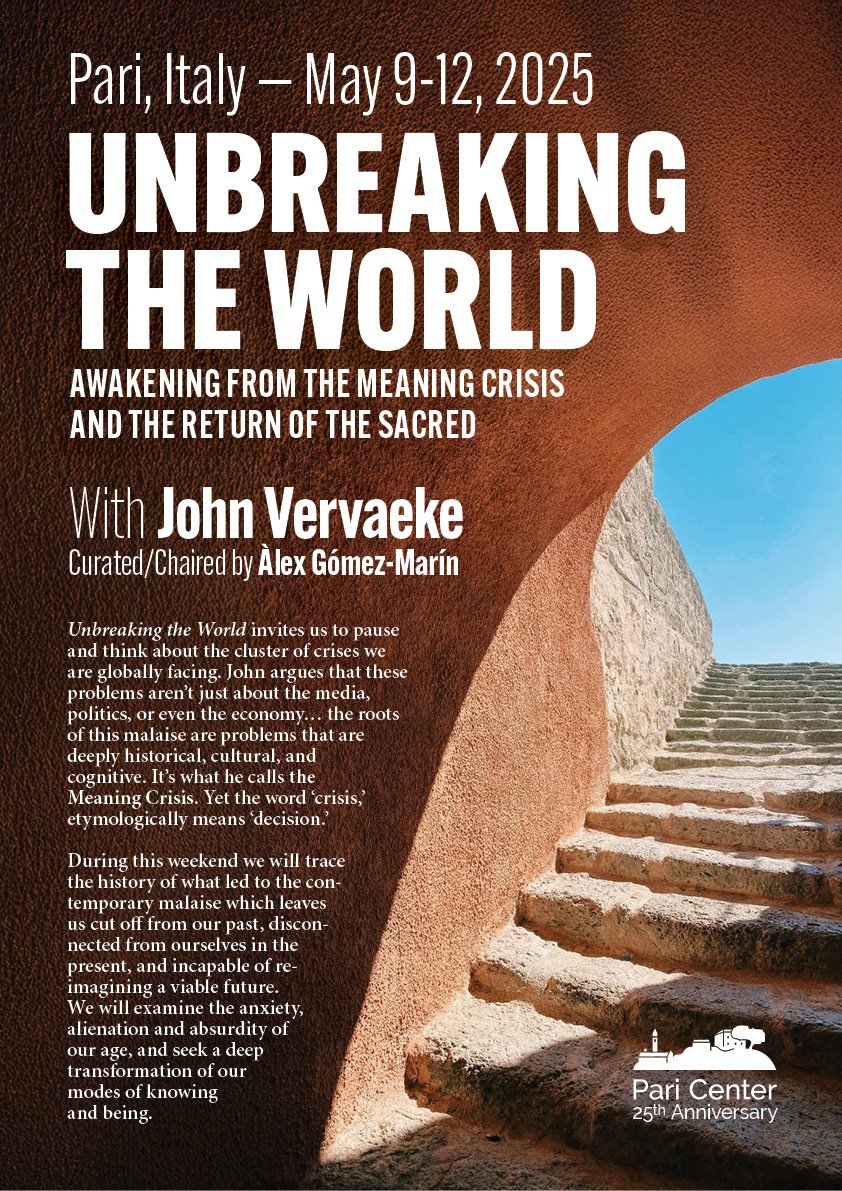
Unbreaking the World invites us to pause and think about the cluster of crises we are globally facing. John argues that these problems aren’t just about the media, politics, or even the economy… the roots of this malaise are problems that are deeply historical, cultural, and cognitive. It’s what he calls the Meaning Crisis. Yet the word ‘crisis,’ etymologically means ‘decision.’
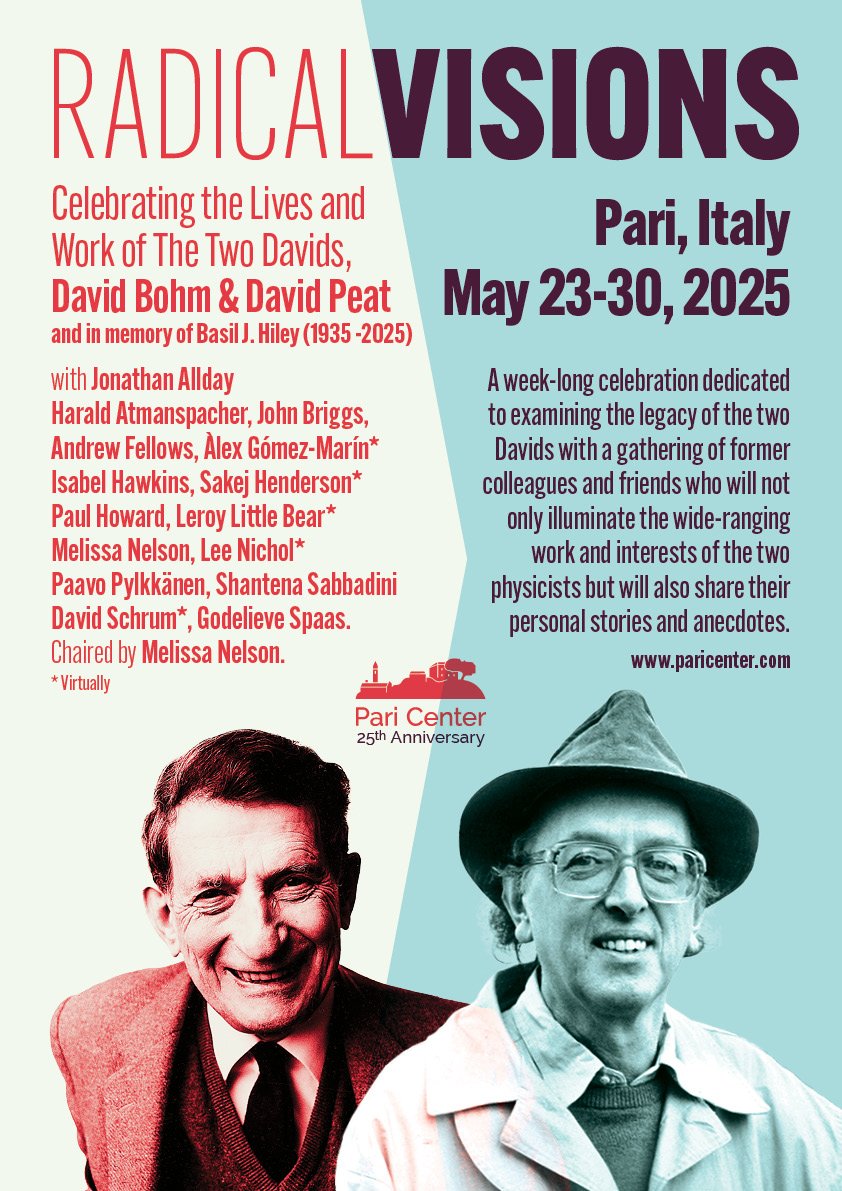
A week-long celebration dedicated to examining the legacy of the two Davids with a gathering of former colleagues and friends who will not only illuminate the wide-ranging work and interests of the two physicists but will also share their personal stories and anecdotes.