Entanglement
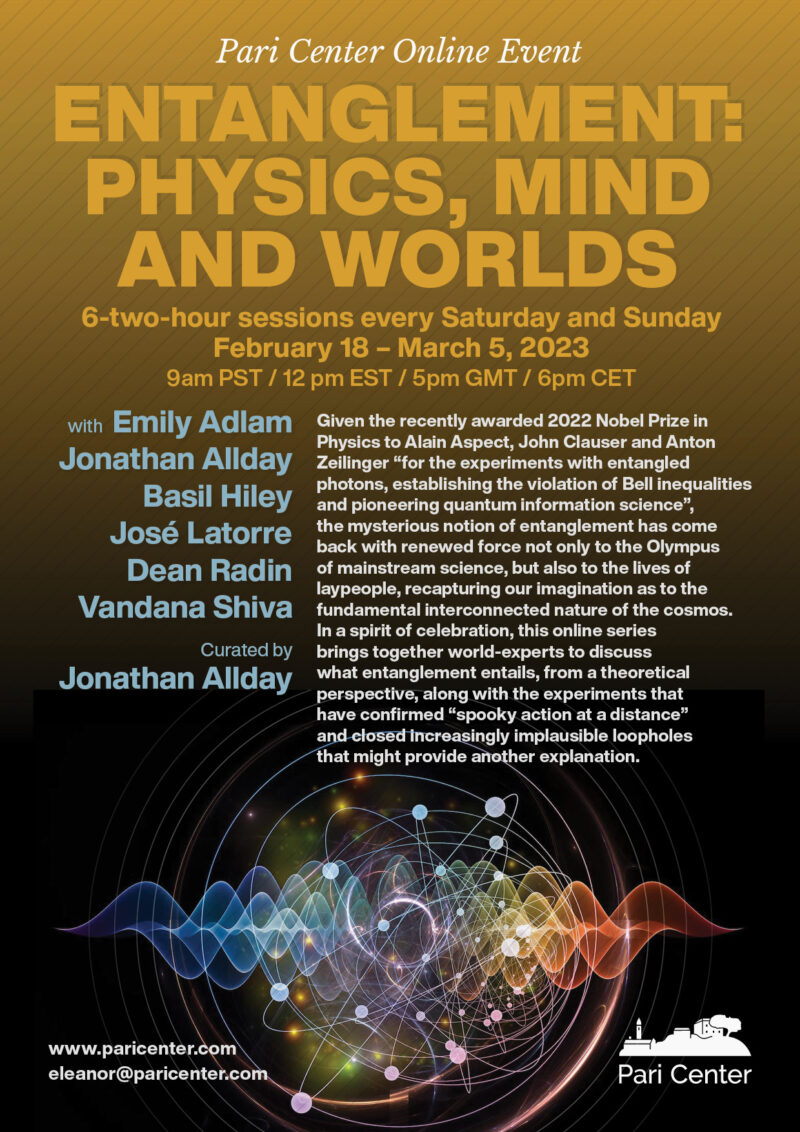
OnlineEntanglement: Physics, Mind and Worlds with Emily Adlam, Jonathan Allday, Basil Hiley, José Latorre, Dean Radin, Vandana Shiva Curated by Jonathan Allday February 18 – March 5, 20239:00am PST | 12:00pm EST | 5:00pm GMT | […]
Entanglement: Physics, Mind and Worlds with Emily Adlam, Jonathan Allday, Basil Hiley, José Latorre, Dean Radin, Vandana Shiva Curated by Jonathan Allday February 18 – March 5, 20239:00am PST | 12:00pm EST | 5:00pm GMT | […]
José Ignacio Latorre got his PhD in Particle Physics at Univ. Barcelona. He was a Fullbright Fellow at MIT (USA) and a postdoc at the Niels Bohr Institute in Copenhagen. He then became associate professor at the Univ. Barcelona and, later, full professor in Theoretical Physics.
Since the discovery of Bell’s theorem, the physics community has come to take seriously the possibility that the universe might contain physical processes which are spatially nonlocal, but there has been no such revolution with regard to the possibility of temporally nonlocal processes.
Basil J. Hiley is a British quantum physicist and professor emeritus of the University of London. He received the Majorana Prize ‘Best Person in Physics’ in 2012. A long-time co-worker of David Bohm, Hiley is known for his work with Bohm on the implicate order and for his work on algebraic descriptions of quantum physics in terms of underlying symplectic and orthogonal Clifford algebras. Hiley co-authored the book The Undivided Universe with David Bohm, which is considered the main reference for Bohm’s interpretation of quantum theory.
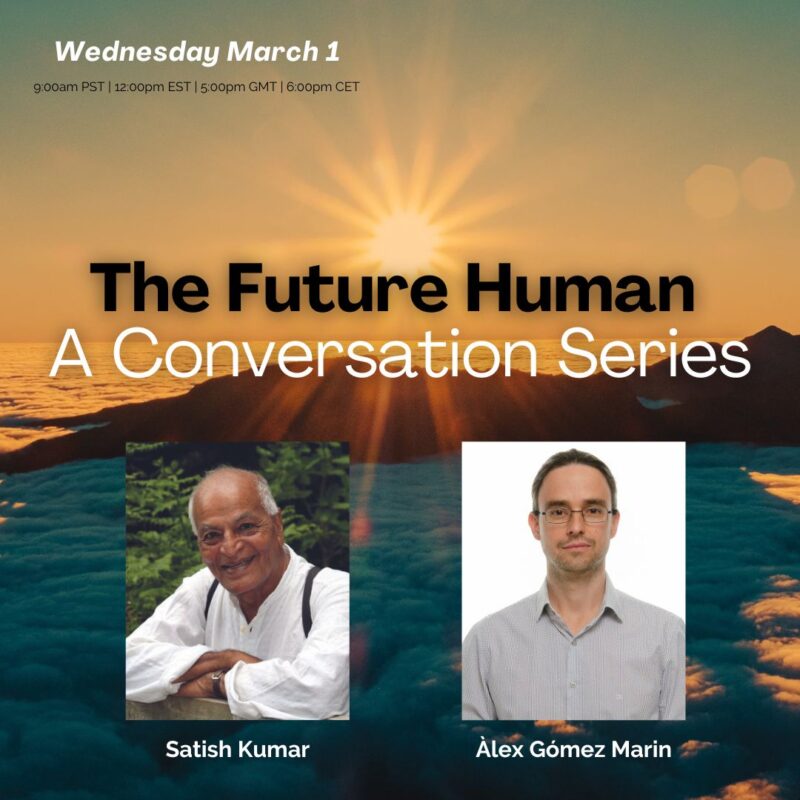
The second conversation in this series will be on Wednesday March 1, 2023 with Satish Kumar. Our conversation will orbit around “Love”.
Methods for investigating mind-matter interactions were proposed by Sir Francis Bacon at the very origins of empiricism, over three centuries ago. Systematic scientific studies began about a century ago. In this talk, I will briefly review the modern experimental literature on “psychokinetic” effects, then I will present in more detail experiments I have conducted involving random physical systems based on quantum indeterminacy, photon polarization, scattering, and entanglement, the molecular structure of water, growth of plants and stem cells in vitro, and influences on human mood and physiology. I will also discuss the epistemological challenges in conducting these kinds of studies, as well as the practical and philosophical implications of mind-matter entanglements.
I will discuss the implications of the concept of nonlocality and hidden variables to our understanding of life in the real world. Making a concrete analogy between quantum systems and humane societies reveals a way of being-in-the-world that is not only more Beautiful and True but also Good. I will argue that the revolutionary discoveries of the quantum revolution inform and inspire current revolutions in ecology, agriculture, and politics.
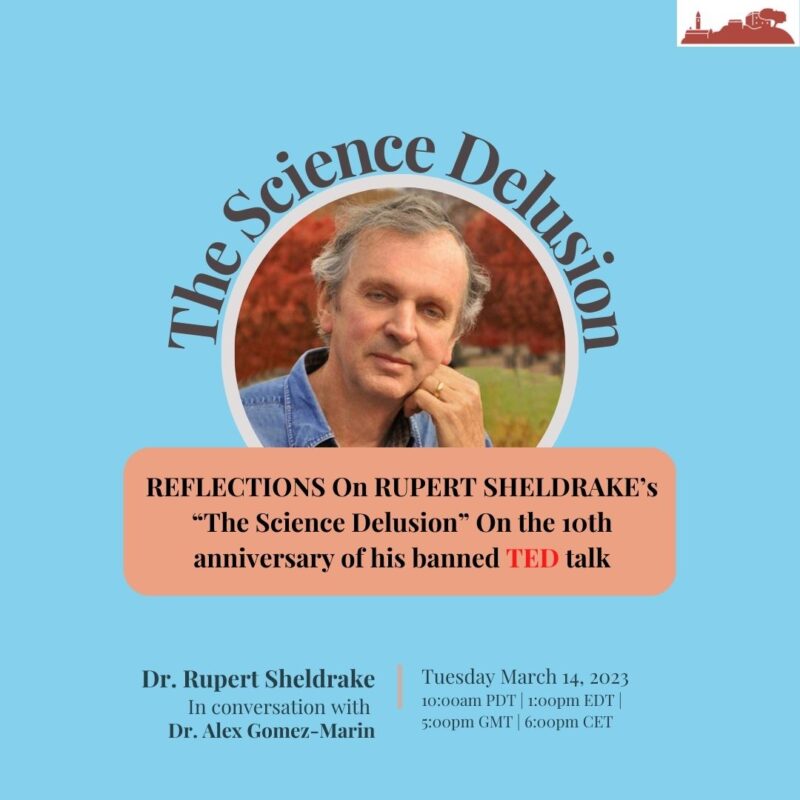
In January 2013 Rupert Sheldrake gave a talk at TEDx Whitechapel entitled “The Science Delusion” where he questioned ten fundamental beliefs of mainstream science. The event was called “Visions for Transition: Challenging existing paradigms and redefining values (for a more beautiful world)”. After protests from two militant materialists, P.Z. Myers and Jerry Coyne, and in consultation with an undisclosed Scientific Board, TED declared: “we feel a responsibility not to provide a platform for talks which appear to have crossed the line into pseudoscience.”
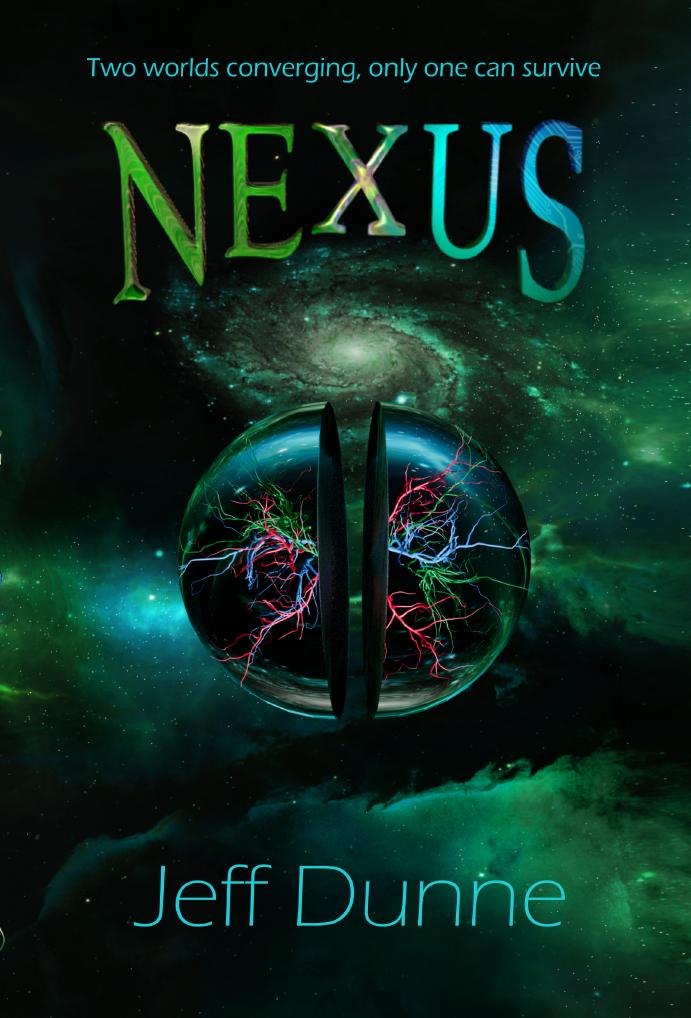
In his recently published book, Nexus, Jeff brings unites three decades of scientific experience with four decades of pursuits in philosophy and metaphysics to weave a story that introduces the principle of syntropy and its importance of finding balance at every scale – personal, societal, and global. Jeff’s driving passion is to help transform our world such that materialism gives way to the recognition of the crucial role that consciousness plays in the formation of reality.
Do plants have feelings? How blind are we to their own internal experiences? Perhaps they offer an untapped opportunity to reconsider how we understand ourselves. What about bees? Do we appreciate their unique cognitive abilities, both as a group and as individuals? Their brains may grant them a kind of consciousness akin, or not, to ours. And, what about cells? How does bioelectricity contribute to their collective problem-solving?